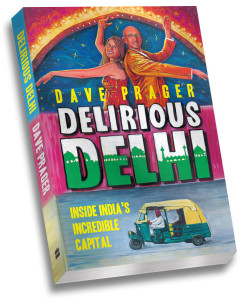
incredible india, indeed

This is entirely worth watching. It’s well-executed and quite inspirational, and it makes us want to hop on the next plane, make a right at GK II, and see where the road takes us.

a wrinkle in time: life on India’s half-hour offset

India is one of the few countries in the world whose time zone is unevenly offset from the standard one-hour deviation found most everywhere else: it is five-and-a-half hours ahead of Greenwich Mean Time.

Not five hours. Not six hours. Instead, it’s five-and-a-half hours.

That half-hour offset makes the math surprisingly difficult, especially on morning calls to the parents back home. On numerous occasions, our sleepy cortexes mismanaged the math and woke our parents just after they’d gone to bed for the night; and on just as many occasions, our last few minutes of seven AM slumber were shattered by parents who thought it was already eight.

And just when we’d gotten the hang of things, along came daylight savings time in the US, a further bit of math that threw our family time and conference calls into total chaos.

How did this come to be? We can only assume India chose their half-hour offset to avoid the political fallout that would have resulted had they favored noon in eastern Calcutta over noon in western Ahmedabad; this way, in a show of national unity, everyone is equally inconvenienced. Still, combine this unified time zone with the fact that India straddles Bangladesh to the east and to the west, and you have the unusual temporal opportunity to drive east from Dhaka and arrive in Tripura earlier than when you left.

So then what about Nepal? Perhaps politics also played into Nepal’s decision to offset themselves a further fifteen minutes ahead of India—a temporal nose-thumbing at their neighbors to the south?

(Of course, we didn’t know Nepal had such a bizarre time zone until about halfway through our week-long trip there; it took us that long to figure out why we were somehow exactly fifteen minutes late to every appointment.)

the bank that ruined our slumber

The neighborhood’s nightmare began one evening around three AM, dragging us out of our slumber with what sounded like a piece of sheet metal being hit with a hammer.

Our first thought was that the very worst thing imaginable was happening: our air-conditioner must be malfunctioning.

I roused myself and went to the window, raising the heavy fabric shade, expecting to see smoke belching from the unit or a monkey tearing it apart is its bare hands. That’s when I saw the armored cars, the men, and the guns the men were holding as they watched other men remove metal boxes from the armored cars and toss them on the ground with sleep-shattering crashes. Still other men picked up the boxes and carried them into a bungalow that was otherwise unremarkable but for the small ICICI bank logo above the doorway—a doorway that had always, until three AM on this weeknight, been covered by a metal shutter.

A few weeks before that colossal three AM racket, we’d noticed some renovation work in the upper floors of the ICICI-labeled building. This building was located on the main road between our house and Hauz Khas market, just a stone’s throw away, and although the potted plants on the building’s windowsills had always been kept trimmed and watered, the building had never before shown any signs of life. As with all construction sites, the workers renovating the building were given the privilege of living on-site for the duration of their work; what had drawn our attention was their shadows thrown against the upper-floor walls as they bent over their indoor cooking fires, defying all existing fire codes and fire prevention logic.

Now there was this colossal three AM racket, which lasted until five AM. The next day, the racket began again at a slightly more reasonable six AM, and repeated itself two or three times a week thereafter for the duration of our stay in India; although never again did they decide to go at it earlier than sunrise.

Until we learned to sleep through it, this wake-up call often had us out of bed and into the shower at ungodly hours. Sometimes I’d walk out on the balcony and study these men while sipping my coffee, these ICICI employees who were slowly taking on “mortal enemy” status in my sleep-deprived brain. Their operation involved a disproportionate number of thin older men standing around the armored cars, doing their best to look intimidating and alert, holding ancient rifles with worn wooden stocks that wouldn’t have looked out of place firing on the British in Meerut, watching a smaller number of thin younger men to make sure they didn’t run off with the cash as they lifted and threw the boxes, casting longing glances at the chaiwallah in the shade of the nearby tree.

The metal boxes would land with spectacular thuds, the kinds of sound that thin metal boxes dropped from a truck make when they’re full of thick, juicy stacks of rupees.

Once the trucks were empty, the men would emerge from the building carrying the multiple metal boxes with ease, implying that their contents had been emptied into what I presume was a big pool of money in which ICICI executives would routinely bathe. They’d toss the boxes lackadaisically into the trucks, where they’d roll about like coins dropped into an empty soda machine. Only far louder.

And then, with a great show of glancing around for bad guys, the guards and the men would stand around scratching for a few minutes. And then they’d hitch up their pants, spit one last time, and pile into the trucks to drive away.

photos from Saigon

A few of our favorite shots from our recent weekend in Saigon. I think the third one may be the best photo I’ve ever taken. You can see more on Flickr.

1

6

5

3

4

2

Check out Flickr for the full set! More on India coming this week.

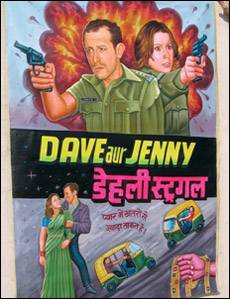
dave and jenny in Gulf Life magazine

Several eagle-eyed readers have, while taxiing down the Heathrow runway or descending into the hot Bahraini sun, spotted some familiar faces gracing the pages of their in-flight magazine: ours.

Gulf Air recently commissioned a retelling of the saga of our famous Bollywood poster — including some rare behind-the-scenes photos! — to grace the pages of their in-flight magazine, Gulf Life. Click here for the staid online version, or check out the dazzling two-page spread below.

poster

the kid on the bike

It was during a walk we took just beyond the northwest reaches of the Old City—where the chaotic lanes give way to streets at right angles and middle-class trappings, but still retain the capacity for surprise: an ice factory? a cluster of stores selling test tubes, electronics kits, and other supplies for science teachers? a tree draped with movie film that, upon closer examination, reveals frame after frame of Shah Rukh Khan?—when a boy on a bicycle decided to practice his English on us.

Spotting Jenny and I from halfway down the street, he peddled furiously towards us. He slowed as he came near and whispered as he slipped by.

“Fuck!”

A few feet beyond us he stopped, put his feet down, and turned to gauge our reaction. He was eight years old, riding a new bicycle that still had its factory shine. His hair was neatly combed.

Jenny and I kept walking.

Emboldened by our lack of shouting and that we showed no signs of chasing him, he tentatively peddled by us again, making sure to pass a few feet beyond arm’s reach. “Fuck you!” he whispered again as he passed, this time with more confidence.

Laughing to ourselves, we continued onward. In front of us, he circled around for another pass.

“I want to fuck you!”

This time we gasped, a reaction that clearly pleased him. He stopped behind us with a smug look on his face.

“Me?” I asked, pointing to my own chest in mock horror.

“Yes!” he hollered, standing on his pedals and launching himself down the street behind us. When we looked back a few steps later, he had stopped again, and was clearly deliberating with himself. Finally his deliberations ended, and we could hear him approaching from behind, gravel crunching beneath his tires.

“I want to fuck you-oooo!!!”

“Me?” I asked him once more. “ME?!? Are you SURE?”

He skidded to a halt and stared at us, taking a deep breath and then screaming loud and high and sustained: “YEEESSSSSSS!!!!”

His shout trailed off into cackles. He turned and rode around a corner, and was gone.

jugaad

My office in Gurgaon didn’t exactly provide the most ideal working conditions. The municipal power was completely unreliable, so we had a shipping container-sized generator running almost full-time in our driveway, spewing diesel fumes into our office when the wind was right. We had no microwave, no refrigerator, and nowhere appropriate to wash our dishes. Worst of all, the improperly-installed urinals emptied into the same drain-line used to drain the floor, essentially creating a stagnant open-air sewer that filled the office with the stench of urine. But we made do.

And this is the most important concept we learned during our time in India: jugaad. Making do.

The nearest English equivalent is “jury-rigging”, but that translation doesn’t do jugaad justice. My coworker Anurag translated it as “a duct-tape arrangement.” Artist Sanjeev Shankar describes it as “attaining any objective with the available resources at hand”. Jugaad is about improvising a solution. It’s about ingenuity in the face of adversity.
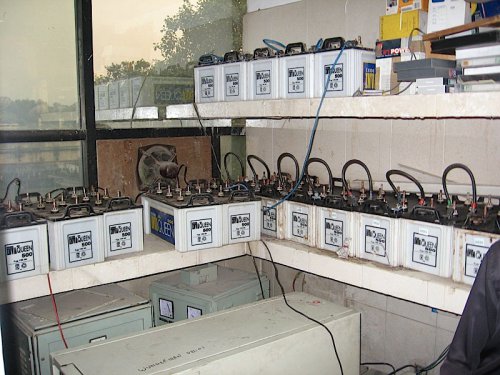
backup
Backup power for our server room, jugaad style.

Many of our friends, when we asked them about it, said that the concept is best illustrated by a common rural sight that people actually refer to as “a jugaad“: a homemade vehicle made by cobbling together a wooden cart with the kind of diesel water pump farmers use for irrigation.

Picture 5
Picture by Flickr user Stuart-Cohen.

Fitted with makeshift steering and braking mechanisms, these jugaad vehicles are used for everything: for transporting people from one village to another, with dozens of riders crammed together tighter than the bundles of sugarcane they are also used to transport; for trips to regional markets; and for transporting the pump itself. Farmers share or rent these pumps, and this arrangement lets the pump actually transport itself to wherever it’s needed next.

Picture 6
Picture by Flickr user lakshman_M.

No two jugaad vehicles are the same, because each one is an improvised solution using unlikely parts. These vehicles are the purest representation of this spirit of ingenuity, and everyone we spoke to swelled with pride at India’s capacity for jugaad. “We are like that only,” my boss Murali would tell me when describing solutions to situations that would send most goras scurrying for the nearest five-star hotel.

The variety of solutions to seemingly intractable problems we saw supported this patriotic esteem: motorcycles chopped in half and welded to carts to create centaur goods haulers. The way families would fit mother, father, and three kids onto a single scooter. The clever repurposing of used water bottles as cooking oil containers. Rope spun from discarded foil packets. Cricket wickets made from precariously balanced stacks of rocks. And, as Anurag sardonically pointed out in a political statement I don’t understand but assume to be insightfully hilarious, Atal Bihari Vajpayee’s government: a duct-taped coalition of thirteen political parties.

As one blogger put it when describing those diesel water pump trucks, “these vehicles reflect the true spirit of innovation in rural India.”

But we think the spirit of jugaad is actually broader than clever mechanics.

Jugaad is the philosophical outlook necessary to make it work, regardless of what “it” is. It’s about solving problems with what you have, not with what you wish you had. For the office workers who would wait on Delhi corners for rides to Gurgaon in private cars driven by drivers looking to make a few bucks, jugaad is obviously the human Tetris that fits ten people into a car built for five for a shared commute to Gurgaon; but it’s also the stoic patience that’s essential for total strangers to sit on each others’ laps and breath in each others’ sweat for a ninety-minute sauna down MG Road. Jugaad is the ability of families to endure thirty-two hours on the train from Mumbai to Amritsar, when the three-hour stretch Jenny and I rode it from Bharatpur to Delhi left us exhausted and claustrophobic. It’s the hope for the future that lets a woman and her son spend two days waiting on a median for someone to pick them up.

Jugaad is how everyone gets by.

Jenny and I come from a tool-addicted culture. Before we came to Delhi, we couldn’t function without a certain baseline of modern conveniences: we needed adequate light, temperate air, comfortable chairs, and personal space; and if we lacked any of those, we’d be unable to do our jobs.

But the jugaad philosophy suggests a different approach: modern tools and technology are appreciated when they’re there, but they are not cardinal requirements for existence. Technology is a comfort, but not a necessity, and a lack of technology doesn’t change the fact that the job’s got to get done. Under the jugaad philosophy, only we Americans whine that the air conditioning has gone out; everyone else rejoices in the good fortune of having had air conditioning at all, and gets their work done anyway.

Picture 4
Picture by Flickr user Primus D’Mello.