Singapore update #1: here we are

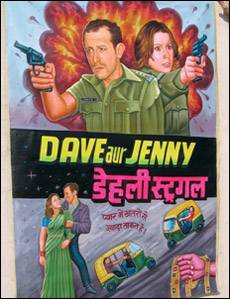
After a month of sweaty bus seats and heat rash and coconut in every entrée and stuffing ourselves silly forty-six cent lunches and Tamil temples and Kerala sunsets and Nepalese hats and ear infections and stolen cameras and recovered cameras and re-stolen cameras and body boarding and five dollar hotels and mosquitoes and relaxation, and a further week of wearing out our welcome in our friends’ spare rooms and eating at our favorite restaurants one last time, we’ve packed our bags and left India with slightly fewer possessions than with which we arrived (not counting the three extra suitcases brought back to the US full of wicker crafts and indigenous arts and massive custom Bollywood posters we didn’t want to drag around Asia with us).

And now we’re in Singapore.

Delhi is still on our minds and in our hearts. Walking around this strange city and seeing its unfamiliar people, we alight on Indian faces; we want to walk up to them and tell them “We lived in India!” and be their friend because we’re seeing Singapore through their eyes as much as our own.

For the next two months, both Jenny and I will be volunteering for a charity here in Singapore as we hunt for jobs that, you know, pay. After a few missteps with the housing the charity provided (including a complete lack of electricity, a complete lack of furnishings aside from two mattresses, and a toilet located behind a locked metal grate in an abandoned adjacent storefront), we’ve managed to find a flat and unpack two of our four giant bags.

Because real estate in Singapore is so expensive, most homeowners tend to rent a room to boarders. So we’re living on the top floor of a government housing complex with Jimmy and Fiona, a Singaporean couple of Chinese descent whose kids have fled the nest to make room for the two of us plus Casey, a Chinese guy who we’ve seen for exactly one minute over the course of the last three days. A retired airport cargo worker, Jimmy drives a taxi when the mood strikes him; other than that, the couple spend their day fawning and fussing over their neighbor’s baby, Peter, who has the largest head we’ve ever seen on a nine-month old.

Jimmy and Fiona are determined to make us feel at home—so much so that they’re nearly smothering us. They follow us around the house, making sure we know where we can find forks and coffee mix and liquor and towels and ordering us with every other breath to make ourselves comfortable. When Jimmy came upon me standing up in front of the TV to watch the news for a minute, he forced me into his easy chair, forced me to recline it, and forced me to lay back; and when I got up after completing the minute I wanted to watch, the look of disappointment on his face stung me. So when we discovered that Fiona was making our bed and doing our laundry after we left for work, we decided not to protest. If they want us to be comfortable that much, who are we to tell them no?

discounts

“Did you ask the owner for a discount?” Dipankar asked.

“No,” I said. “Why would I do that?”

“Because that’s what you do.” And then Dipankar walked up to the owner, asked, and received.

It was August, 2007. To celebrate the end of my trial month at my company’s Indian office, I had invited my coworkers to join me at a seedy restaurant near GK II for a farewell-for-now; in two months I would return to Delhi, my bags bursting and my wife by my side. Perhaps a dozen of us had gathered for beer and snacks; enough, in Dipankar’s mind, to warrant some special consideration. So he explained to the owner that of all the restaurants in all the neighborhoods in all of Delhi, I had chosen to gather my friends at this one; and wasn’t that worth something to us?

And it was indeed: 10% off our food bill.

I whooped with joy, not for the money but for what it meant: in this country, a number written on a piece of paper means nothing. At restaurants, at hotels, at appliance shops and vegetable stores, all you have to do is ask. “How much does it cost for non-guests to use the swimming pool? Oh. Is there a discount for the off-season? OK, great!”

You don’t even need a reason for the discount. When you’re buying a teapot, just asking “Is there a discount?” is enough to land 10% off.

On Friday night, it all came full circle. Jenny and I gathered a number of friends at a dingy restaurant in Defense Colony to celebrate our imminent departure from Delhi. As the first few guests arrived, I put my learnings into practice.

“Excuse me,” I said to the head waiter. “I’m bringing a number of friends to this place tonight. Is there any discount for us?”

“Yes,” he said immediately. “Two-for-one hard alcohol drinks.”

“What about beer? We’ll be drinking a lot of beer.”

“Yes, 30% off of beer.”

I returned to my seat, triumphant. Although we would soon order far more drinks than we would have without the discount, and the generous tip we conspicusously left for the head waiter more than ate up our savings, the triumph was not dulled. I have learned from India: to save money, all you have to do is ask.

the auto driver’s point of view

When four people want to ride in an autorickshaw, someone has to sit up front, one cheek on the driver’s seat, arm around the driver to keep from falling out. With three girls as my fellow passengers, front-seat duty was mine. And here’s what I saw, with my camera held at exactly the level of the auto driver’s eyes:

v

I’ve seen a similar banners on taxis and autorickshaws around the country,  taking up precious visual real estate one would expect to rely on to see the massive trucks bearing down on you with no intention of turning. This particular banner read “Al Lazam” (the driver’s name? His favorite soccer team? Free advertising for his brother’s restaurant?). Fully one fifth of his windshield was blocked by this opaque blue bar  — exactly the portion best utilized to see what vehicle is hellbent on ramming you next.

Is driving in this country not already dangerous enough?

With three girls in the back and me in the front, the auto driver decided to make me look cool. He grabbed my hands and put them on the motorcycle-style controls, the left hand working the brake and the right pumping the accelerator. For fully ten seconds I was in charge, discovering that the steering mechanism is surprisingly stiff and sensitive at the same time. The auto driver laughed along with me until he suddenly wrested back the controls and saved us from a car I had no idea was coming. The blue bar may have prevented me from seeing more than fifty feet in front, but somehow the driver was able to manage — ending my career as an auto driver as soon as it began, and saving all of us from becoming Keralan road sambar.

Another example of intentional auto blindness:

viktor2

strays

Every square inch of Delhi is claimed by gangs of stray dogs who viciously and vociferously defend their turf. We humans go about our business, ignoring them or avoiding them or kicking at them, not knowing that there is a whole political structure to their world. The Hauz Khas Howlers guard the main market against territory incursions by the Gulmohar Growlers, while the Aurbindo Maulers and the Green Park Greyhounds maintaining a dumpster-sharing agreement in which the former is allowed access to the discarded chapatis on Tuesdays, Thursdays, Fridays, and alternating Saturdays, during which time the latter stands guard to ensure no passing autorickshaw goes un-barked at.

The stray dogs live, love, and lie on the street; but their docile daytime trotting gives way to snarls and warfare at night, and the evening streets echo with their perennial power struggle.

Most stray dogs are ragged and haggard, with patchy fur and the vacant look of the perennially hunted. But outside our flat live three dogs who are stray in name only. Bruno, Signal, and Snoopy are strays who have been adopted by Amba, the Japanese translator who lives on the second floor of our building. What, you ask, is the difference between adopted and owned? The answer is where they sleep: Bruno, Signal, and Snoopy are fussed over and fed too much, but they aren’t allowed inside.

Fat from their lavish life, they spend their days napping, waddling from one nap to another, and biting the tires of passing cars. At night, though, the envy of strays who actually have to work for a living means their territory is constantly encroached, and that their vocal cords get the workout their muscles never do, usually right below our window.

Ajay the driver

We did not own a car during our time in Delhi. Autorickshaws sufficed for getting around the city, miserable as they were in the summer sun, stuck in traffic, fumes roiling around us, coughing into our handkerchiefs as we prayed for the light to change. The only automobile need we had was for my daily slog to Gurgaon; so instead of achieving the Indian dream of car ownership, we just outsourced it to the local taxi stand.

I would call them every morning. For the first month or two, I’d have to explain who I was and what I wanted and when I wanted it and where I lived. But soon the rhythm established itself. “This is Mr. David,” I would say. “Pickup, please.” (This phrase became Jenny’s unofficial alarm clock: me bellowing “This is Mis-ter Da-vid!!!” when the voice on the other end didn’t understand, a far worse way to wake up than the car horns or the loud pigeon sex on our air conditioning unit that would have roused her otherwise.)

For the first year, I was picked up by a different driver every day, one of the dozen or so who worked and slept and ate and bathed at the canvas taxi stand on the other side of Aurbindo Marg. The boss, Birender, had a private room with a cot; everyone else slept on mattresses on the common room floor. Some of the drivers spoke no English at all, while one or two were fluent enough that Birender reserved them for tourists taking trips to Rajasthan. If Sanjay was my driver, I knew Birender hadn’t booked any assignments driving foreigners around the Golden Triangle. The oldest driver—I never knew his name—tried and failed for sixteen months to beat me out of 35 Rupees for the incoming border toll Birender never required me to pay. He even tried on my very last evening coming home from work. Persistence!

My rotating cast of drivers ended last November, when I began to get Ajay almost every day. Ajay is 22 and hip. His hair is longish, slicked back, and heavily oiled. He sports an earring in one ear, a mobile phone far more expensive than mine, and a stylish jacket that looks like a name brand until you read what the logo actually says: “Important Brand.”

Ajay was trouble. I don’t think he respected me. He was always late. He would always argue with me about the route, insisting that MG Road was too jammed and that the highway was wide open (and while the highway was indeed smooth sailing, the offramp to Vasant Vihar more than ate up the time we saved)—not because time and jams were his concern, but because I think he felt cooler driving on the highway. He was clearly unhappy to be slogging to and from Gurgaon twice a day (a sentiment I completely understood); I suspect the other drivers foisted the hardship duty on him because he was the youngest.

Usually after a long day’s work, I’d get in the car, pop in a DVD, put on my headphones, and ignore Ajay as he talked on the phone or to himself. (Which he did. A lot.) At first he would surreptitiously put a single earbud headphone into the ear he thought I couldn’t see so he could listen to music off his mobile (my mobile isn’t even color!); but once he realized I didn’t mind, he would just put the mobile on speaker, and the quiet moments my shows were broken by the tinny sounds of Om Shanti Om or Bilo Rani.

Sometimes I’d play music out loud on my laptop. Ajay would sing along after every line, even though he didn’t know the words, and even though he didn’t know English. It’s hard to mimic even simple lyrics to an unfamiliar song in an unfamiliar language, so The Beatles singing “I think you’ll understand” became “Aye tee oo huh nuh stuh”.

One day, during a miserable jam, with Ajay staring glumly ahead, I decided to introduce him to the best my country had to offer. Stretching my Hindi as far as it would go, I told him, “Yeh ghanna subzi acha hai,” which I hope meant “this song is the best.” And then I put on Guns ‘N Roses’ Appetite for Destruction, sat back, and smiled with pride at introducing this fellow to the very greatest rock album America has ever produced.

It was during the lull between Nightrain and Out Ta Get Me when I heard the tinny sounds of Pappu Can’t Dance coming from the front seat: Ajay had turned his mobile as loud as it could go to distract him from the monstrous din coming from the back seat.  I got the hint, put on my headphones, and turned on my DVD. He was much happier to be ignored.

the maid in the morning

It happened on the very first morning in our flat, and it would happen nearly every day thereafter. We put on our clothes, exited the bedroom, and silenced the ringing doorbell that had woken us by opening the front door and revealing a woman we didn’t know. She began shouting at us in a language we didn’t recognize.

She wore a faded mustard sari and had a big brass ring in her nose. She tugged her headscarf with a humility belied by her shouting as she mimed shapes we couldn’t discern and pointed emphatically out to the terrace.

“I’m sorry,” we told her. “We don’t understand.”

More shouting, waving, gesturing, and pointing, all punctuated by an sharp tug of her headscarf.

“I’m sorry!” We told her. “No Hindi!”

She paused and looked at us quizzically. “Something something?” she asked us in her language.

“No,” we said, relieved. “No Hindi.”

She threw her head back and laughed, and then she resumed her shouting, ignoring our protestations. Finally we gave up, exchanged a glance, and put looks of understanding on our faces. “Aha!” we said, smiling and nodding. “Haan, haan!”

She grinned with triumph and left. We shook our heads and closed the door.

We repeated the farce the next morning. Neither of us could wave or mime well enough to convince her that we didn’t speak her language. As the week progressed, she grew increasingly frustrated with our inability to comply with her plainly stated requests, and we grew increasingly frustrated with the scene at the door. We stopped answering the doorbell before noon, pulling the pillow over our heads and reaching for the earplugs to block the ringing, until a neighbor finally explained it: she was Sheila, a maid collectively employed by the building, and she was there for our garbage, which we were to leave for her on the terrace; and we were going to pay her 300 rupees a month, plus a bonus on Diwali, and she wasn’t going to let us forget it.

Sheila rang our doorbell every morning we didn’t leave a bag on the terrace for her, and always chattered away with no acknowledgment that we had no idea. We even practiced our Hindi lessons on her. “Hamlog hindi nahi safehajta hain,” we carefully told her in our laughable Hindi accent. “We don’t understand Hindi.”

“Nahi?” she cocked her head. But before we could rejoice at this communications breakthrough, she laughed, long and hard, and then continued her incomprehensible lecture.

It even happened on our very last day in the flat: “Something something something jao something?” she asked, stopping us on the stairs.

At least we recognized one word. “Haan, abhi hamlog jao,” we said. “Today we go.” She laughed and gave us a long speech. We like to think that she was telling us how nice it was to be part of our lives; but she was probably ordering us to do a better job of separating the paper rubbish in the next place we lived.

leaving delhi, not leaving delhi. (ODS: The Book!?)

As of today, Jenny and I will be unemployed. As of Saturday, we’ll be homeless.

Our time in Delhi has come to an end, you see. But our time in Delhi — and the life of this blog — is just beginning.

Let’s explain.

Jenny and I left America in November of 2007, planning to spend three or four years bouncing across Asia. India is just the first stop on the journey. So now, sixteen months after we’ve arrived, it’s time to do our part for the local economy by creating two job openings.

We’re going to spend the next month traveling: a week in Nepal, and then three weeks in South India. After that, we’re picking up our way-too-heavy suitcases and moving… somewhere in Asia. We don’t know where. If we don’t find jobs—and if you know anyone in advertising anywhere in Asia, let us know!—then we have a two-month volunteer opportunity in Singapore, where we’ll stay until we find something permanent.

If this sounds like a farewell post, it’s NOT. Because now’s the moment to break the news: we’ve got offers to turn our blog into a book! Not just a collection of our essays, but fresh content that weaves our existing posts into a much longer narrative about living in Delhi. Like this blog, it’ll be enjoyable both for those who know Delhi and those who don’t—locals, NRIs, and expats alike.

We’ll decide which publisher we’re going with soon. You’ll be the first to know.

So what will happen to this blog? In the month while we’re traveling, not much – maybe one update a week. (Although we’ll be Tweeting regularly – follow us on @mmmmdave and @JennySteeves.) After our travel, we’ll resume our regular updates—we still have dozens of pictures and half-written posts to publish, and more will come as we work on the book. So rest assured that even though we’re not in India, there’s still a lot about India that we still have to say.

Finally, you should send us your email address so we can let you know when the book comes out, and invite you to the party!

This book wouldn’t be happening if it weren’t for all of you who were reading and commenting. So thanks for your attention and your support!

osho