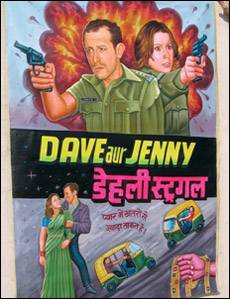
Author Archives: jenny and dave

an Indian grocery store in Aurora, Colorado

Though we believe that India’s flag should display the phrase, “Land Of The World’s Greatest Food”, there were still times in Delhi when Jenny and I needed the tastes of home. This inevitable expat longing obviously extends to NRIs as well, which is why, in any American city with a reasonable Indian population, there are a handful of Indian grocery stores.

And in those stores: roasted channa! Frozen chapatis! Dried garam masala! NRIs (and India-obsessed Americans) rejoice!

And because we were always surprised to see which American brands had made the global trek to our local Delhi markets (Lays, yes; Cheetos, sadly, no), we feel that those of you reading these words in India might enjoy seeing what a Stateside grocery looks like.

That’s what it looks like. A generic storefront in a generic strip mall in a generic American suburb.

(Some advice: if you ever find yourself in an American suburb, seek out the older strip malls. These are the ones without Old Navy and Applebees and Office Depots. Look for poorly-designed parking lots and bad line-of-sight to the road. That’s because these strip malls are too unattractive to the chain stores that are choking American suburbs like cancer until every city is identical to every other city; which means these strip malls are the only suburban locations cheap enough for mom-and-pop restaurants and independent retailers like India’s Harvest to survive. These strip malls are the only places you’ll find anything unique in the American suburbs.)

(Also, for those readers who accused this blog of being too critical of India, hopefully this shows that we’ve got plenty to snark about America as well.)

So, India’s Harvest. India’s Harvest! Though it’s less than a block away from Bombay Bazaar, another Indian grocery, it’s distinguished by boasting a tiny restaurant in the back. So when Jenny and I and Little Georgiana pulled up in our Prius (yes, we’re that much of a stereotype), the first thing we did was order a meal, hoping that finally, finally, we’d find some Indian food here as good as what we’d eaten there.

(Up until now, we’ve been 0-for-about-a-dozen Indian meals. My god, do we miss Sagar Ratna!)

The second thing we did was ask permission to shoot. I explained to the owner that my friends back in the Motherland would enjoy seeing what a US-based Indian grocery looked like. He didn’t seem to care either way.

And here it what it looks like: aisles and aisles catering to homesickness and nostalgia!

Packaged meals, snack foods, sacks of rice, bags of lentils, and, of course, spice boxes: everything you need to recreate the tastes of home, all the way down to pre-baked puris for homemade golgappas.

Then we stopped taking photos. Our food had arrived.

What you see here is the thali we ordered. It was good. But what you don’t see here is the uttapam that arrived at the table too tardy for this picture.

It was the single best uttapam we’d had since we left India.

And so, our craving for India momentarily satisfied, we cruised the aisles looking for other joys.

And there — Haldirams!

And baby eggplant! And green mangoes! And… oh, karela. Well, we’ll skip that one, thank you.

Our shopping spree ended with a few bags of snacks, some frozen lotus root, bhel puri mix, and a bag of pre-cooked paneer cubes.

Oh, and this joyful sight we beheld near the checkout counter.

We didn’t buy any spice boxes this time. We probably have too many as it is.

ganga water, far from the source

Jenny spotted this in the baggage claim at the Denver airport.

Denver’s three Hindu temples (and one elected Hindu lawmaker) are exactly 7,944 miles away from Varanasi. I’m sure they’re all very happy at this holy arrival.

their New York struggle, part III: not-so-cheap labor

This is the third interview in our series about those who did the mirror opposite of Jenny and I: New Delhiites who picked up and moved to New York.

In the last two posts (which explored Indians’ first impressions and the idiosyncrasies of American greetings), we talked about what they’ve found.

In this post, we talk about what they left behind.

Labor is cheaper in India. There, you pay people to do things that Americans usually do themselves. We’ve spoken of this before: the fact that our offices had peons, that someone was paid to remove our household trash, and that men were cheaper than machines at the golf range.

(To say nothing of the glory of hiring Ganga to cook the world’s greatest food for us three days a week.)

(Lord how we miss her baingan bharta!)

So what happens when you leave a culture of cheap labor for a culture where help is too expensive to hire? We asked that of Taveeshi and Devananga, the two Columbia University students we’ve been talking to in this series. “What are some daily chores that you find much harder in the US?” Here’s what Taveeshi said:

“Moving house seems a lot more difficult here than in India. I suppose it’s because labour is much cheaper in India.

“I definitely don’t find the time to cook everyday, though I try to every other day. In India, I wouldn’t even cook as much as I do here because there was always house help to take care of that, so my food habits and meal timings were much more regulated in India.

“Then there are the regular chores like cleaning and laundry that one has to do in the US, whereas back in India I always paid someone to take care of it. But I don’t find these tasks hard at all.

“In fact, when I’m back in India, just because of the way I’ve been conditioned, and because I know help is just a holler away, cleaning and laundry seem like much bigger tasks than they are here.”

We posed the same questions to Devananga. Here’s what she said:

“{I’m challenged by} the fact that everything needs to be done by yourself. I am used to a chauffer in India and my Dad’s assistant, so doing simple chores like sorting out bills, paying pills, running errands was something I had barely ever done.

“There is a lot of manpower in India, so small things which I never even realized need being done, suddenly had to be put thought and focus into.”

As always, we want to hear from readers: Indians who moved here, and Americans who moved there. How did the price of labor change your life?

their New York struggle, part II: American pleasantries

Last month, we began a series exploring the initial impressions of Delhiites as they land in the US for the very first time.

That series was derailed a bit due to a sudden and wonderful addition to our family; fortunately, life has finally settled down enough for us to pick up where we left off.

As foreigners adjusting to life in a megacity, Jenny and I originally created this site to record the challenges we had adjusting to simple things about life in Delhi. You know, like power outlets with on-off switches or the fact that we had to monitor the water level in our rooftop tank in order to ensure a steady supply of showers.

So when we interviewed Taveeshi and Devangana, two students who recently moved from Dehli to New York, we asked them to describe some of the things that initially confused them about their life in the New York. And Taveeshi had a very interesting response about Americans’ penchant for pointless pleasantries.

“The way people talk here. They ask how you’re doing without really caring about how you’re doing. And some are excessively polite and/or diplomatic, so, many times I find it difficult to discern what the person’s real intention is.”

She’s not alone. On our last post, many comments were posted about the same subject, exploring what Americans would consider politeness and non-Americans apparently consider insincerity.

Lakshmi said: “When I set foot at the Dulles airport in DC, the immigration/customs guy asked me how I was doing — and I was taken aback. Am I supposed to know this guy? Does this guy know my cousin? And so, is that how he knows that I would be here at the airport today? Did my cousin ask him to take care of me until he could pick me up at the airport? If so why didn’t my cousin tell me? I looked like a deer facing headlights.”

DyslexicHippo said: “I forced myself to quickly learn to say, ‘You are welcome’ in response to ‘Thank you’s.’ People rarely verbalized their thankfulness in India, but when they did you knew for sure that they meant it, and that those were not empty words. Here it was rude not to say “thank you”, but it meant nothing much at all when said.”

Sandhya said: “The way people smile at you in trains or streets… I would be halfway forming a smile in response but by that time they are already looking somewhere else… and I look like an idiot smiling at no one!!!”

Priyanka said: “I found it strange too that everyone from the cashier to the cab driver will ask you how you are; however, soon enough I realised that it wasn’t from the heart, so why ask???”

Judging from those comments, it would suggest that people in Delhi only present such queries when they genuinely care about the answer.

But I remember many times when friends and co-workers would begin a conversation with me by asking, “Have you eaten?”

I always took this as an Indian twist on the standard banal pleasantry, a conversation starter for which the actual state of my stomach was irrelevant.

But given what we’ve learned from Sandhya, Lakshmi , DsylexicHippo, and Taveeshi, should I have taken those questions more seriously? If I had said that I hadn’t eaten, would I have immediately been taken down to the canteen and present a bowl of dal?

our excuse

Sorry for the lack of updates, but something’s been keeping us busy:

Meet Georgiana Steeves Prager, born February 22 and adopted March 12. If you’re the kind who likes adorable baby pics, you’ll find plenty here. If not, we’ll return to regularly scheduled posting soon.

their New York struggle, part I: impressions on the ride from the airport

For three-and-a-half years, this site has viewed Delhi through New York eyes. It’s time for the opposite: New York as viewed by Delhiites.

Because for every planeload of Westerners desperately memorizing the Lonely Planet as they fly east, there’s an equal and opposite jet heading west. One such recent plane contained Taveeshi and Devangana, two students at Teachers College at Columbia University, one of the city’s most prestigious institutions. And their experience mirrors ours: wide-eyed wanderers in a foreign culture, with camera in tow.

“Wall Street Area”, photo by Taveeshi Singh. See more of Taveeshi’s photos.

We have never met either girl. Taveeshi recently wrote in to join the mailing list for our upcoming book, mentioning in her note that she was living in New York. We responded by asking her for an analysis of our culture to contrast with our analysis of hers. Taveeshi drafted Devangana to add her thoughts; and in the first part of our interview, we focus on first impressions.

Specifically, the drive home from the airport — the journey during which so many first impressions are formed, and so many minds are made up.

I initially arrived in Delhi a week before Jenny did, so our first impressions are not shared. (Her impression, as recalled over instant messenger a few moments ago: “Over-stimulated, overexposed. Dry, pungent, bumpy, crumbling, chaotic, thrilling!”) My first impression involves flashes of landscape snatched during my conversation with Mahua, my company’s HR representative, who picked me up at the airport and instantly became the only human being I knew in all of Asia.

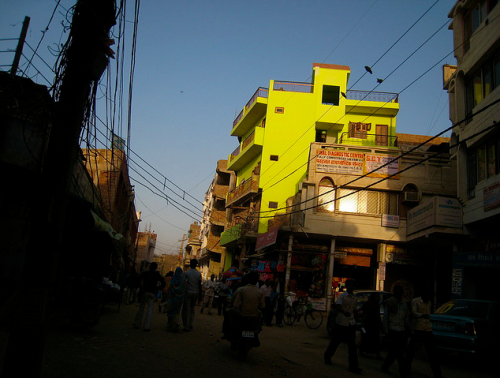
This was before NH-8 was complete, so our route to my temporary home in GK II took us through Mahipalpur. Like Jenny, I recall flickers of imagery more than any one image: bright signboards with unfamiliar script; painted walls; flashes of bright saris; and a road that seemed far too narrow for all the cows and people and cars and bikes and rickshaws simultaneously traversing it.

Mahipalpur at sunset, off the main road. Photo by Flickr user SteelboneLex.

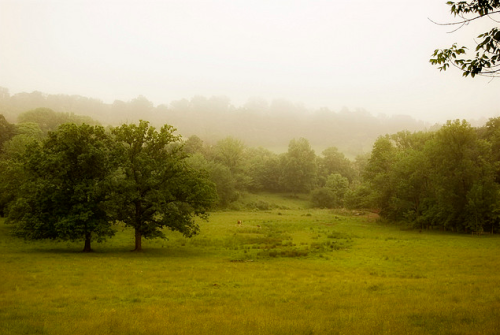
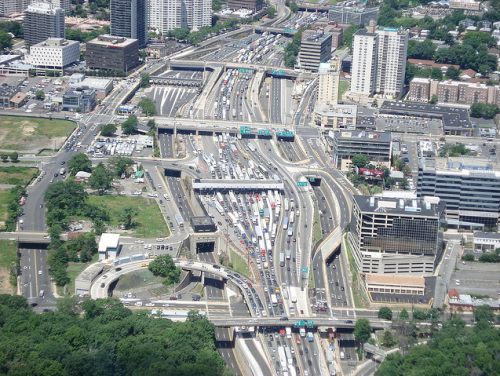
As the picture makes it clear, first impressions often don’t entirely reflect reality. For instance, Devangana debarked the plane and drove directly to the relative tranquility of New Jersey. So her first impressions of the US were pastoral.

“I landed and went straight to New Jersey with my family, which seemed like a beautiful countryside somewhere in the Northern part of India. This was extremely amusing for my family, who was nervous about me feeling unsettled and alienated.”

I imagine Devangana is referring to this aspect of New Jersey…


Photo by Flickr user carroll.mary.

… and not this aspect of New Jersey.


Photo by Flickr user jeremylogan2.

Taveeshi, on the other hand, drove from the airport directly to Manhattan, so her first impression was quite different. And what she told us reflects an immediate insight into our city that’s far deeper than our first thoughts of hers.

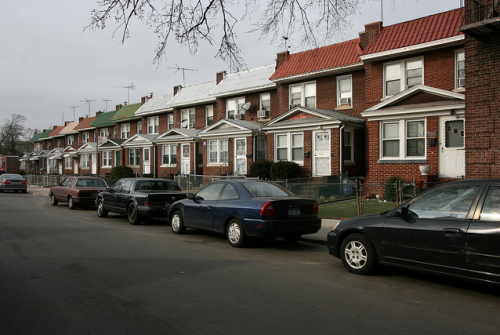
“My friend came to pick me up; and between all the chatter, I struggled to focus on what we were driving past. But I distinctly remember hundreds of little rows of houses that looked exactly the same. ‘Organized, yet lacking identity,’ is what I thought. Which is ironic, considering the culture is all about individualism.”

For some perspective, here is an example of the kind of housing Taveeshi probably saw on her way towards Manhattan:


Photo by Flickr user Rego-Forest Preservation Council

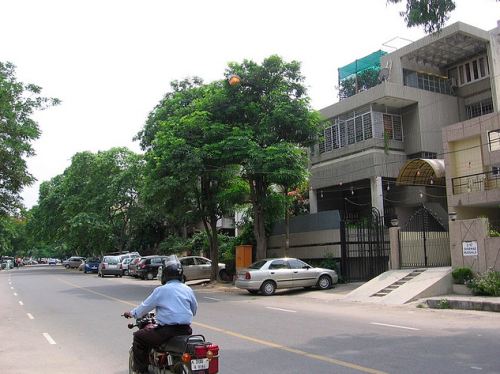
And here’s the building in GK II where I spent my first month.


Photo by me

Comparing those two pictures, Taveeshi is right: which architecture seems more at home in a culture that’s supposed to be renowned for its rugged individualism?

Taveeshi and Devangana will share other observations in the next installment of this interview. (A preview: “The way people talk here. They ask how you’re doing without really caring about how you’re doing. And some are excessively polite and/or diplomatic, so many times I find it difficult to discern what the person’s real intention is.”)

But first, I’d like to open this up to Indian readers who landed in the US, or Americans who have visited India. What impression did  you receive from that first drive home from the airport? Please add your comments below.

If you like this post (and the reader contributions below) you’d like our upcoming book: a humorous travel memoir of expat life in New Delhi. Send us your email or follow us on Twitter so we can add you to our mailing list!

house of the holy cow poop

Editor’s note: we’re reposting some of our early essays, from when we were first opening our eyes to India. It’s interesting to read now what we wrote then. Here’s the original.

The stereotype of India is true: cows wander the streets with impunity. They block traffic, they sleep on the sidewalk, they eat food scraps and plastic bags off the ground. Indians don’t eat beef because they consider cows holy, but just because they’re holy doesn’t mean they’re not an annoyance. In an upscale market in Delhi last December, I was passing a group of about thirty people waiting outside a restaurant when a cow came wandering by. It was a narrow lane with a small sidewalk, and the people waiting had spilled into the street, leaving barely enough room for cars to pass. Just as the cow came from one direction a car came from another, its horn blaring. The cow dodged away from the car and directly into the group of people. There were shouts as the crowd surged back into the unyielding wall, and the panicked cow bore down on the panicking people.

In cases like this, even a holy incarnate needs a little prodding. The day was saved when a parking attendant dashed up and slapped the cow on the side, hard, angrily, repeatedly, until she turned around in her confusion and returned the way she came.

Why would Indian society put up with these giants that obstruct their streets, nose through their garbage, and menace their restaurant patrons? Because for the hundreds of millions of Indians who will never have enough money to even visit a restaurant, the cow is truly a gift from god: from its udders comes food, and from its ass comes fuel.

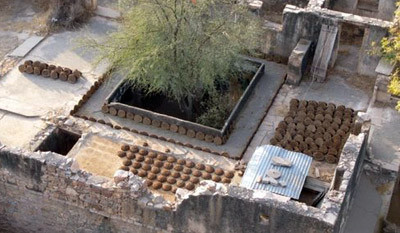
The prevalence of cow poop as a fuel becomes clear the moment you leave the city. Lining the roads in the countryside — in fact, lining any available space not already given over to crops or housing — are row after row of circular foot-wide cowpies drying in the hot Indian sun.

cowpoop

One blogger describes how the cowpies are prepared and what they’re used for. “I would then help my mother to make sheni from the heap of dung collected in the field. Sheni is/are about 30 cm in diameter, 3 cm thick disc made by mixing water, rice husk and chopped rice straw, pulverized by feet, and the balls of mix are pressed flat by hand, and sun dried. These were stacked and stored mainly for monsoon. It was a ‘free’ energy — fuel — for cooking; this practice still continues.

“The cow dung helped us to help grow food in the farms, helped to cook our food, and helped us to maintain our mud house; thus helped us to sustain. And finally the used cow dung in — all forms — went to the soil.”

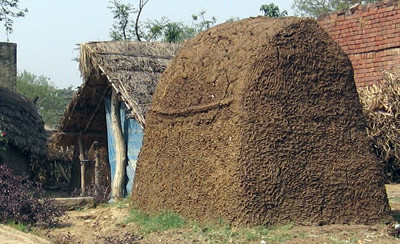
Even in Delhi itself, it’s not surprising to see cowpies drying on sidewalks and embankments. Two months ago, however, on a trip to the rural Indian village of Karanpur, I noticed a new manifestation of cow poop: cow poop houses.

house

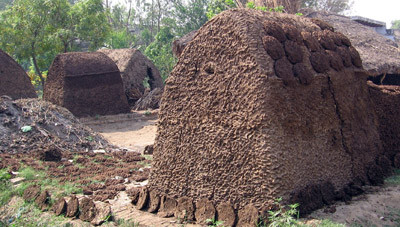
house2

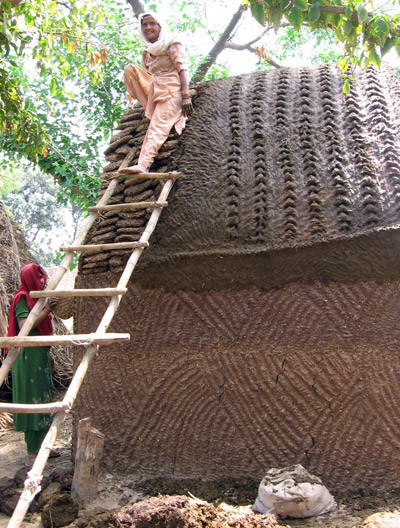
The monsoon is coming. In fact, it might already be here — a downpour this morning turned the road outside my flat into a two-foot deep lake. The rains in India fierce enough to destroy any cowpie left unprotected, melting cowpies into mud, fertilizing the ground but destroying the chance at a hot meal. To protect against this, rural Indians spend the months leading up to the monsoon building huts to store their cooking fuel.

The huts, of course, are also built out of cow poop.

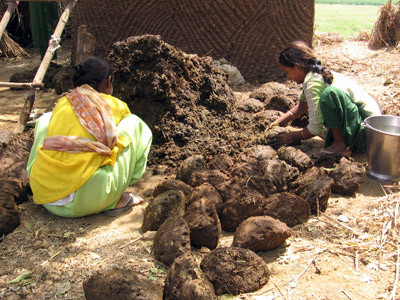
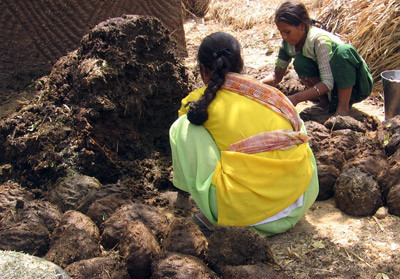
While in Karanpur, we stumbled upon a group of villagers in the process of building a cowpie house. The women laughed at themselves as we came upon them — they were clearly a little embarrassed to be seen by foreigners as they kneaded the poop like bread dough. But it wasn’t a humiliated kind of embarrassment — rather, it was an acknowledgment that we caught them in an awkward moment. It’s how you’d feel if a political candidate dropped by on a door-to-door and caught you mowing the lawn in your rattiest t-shirt.

women

women2

Building the huts seemed like a straightforward process. Dried cowpies are placed into stacks numbering into the hundreds. Wet poop is then molded around them. The poop is presumably mixed with a higher concentration of straw than normal, probably to function much like rebar would in cement. The exterior poop is spread thick and strong to keep the interior poop dry through the rains. It’s doubtful that the houses can survive much more than a few weeks of rain, but that should be enough to keep the fuel flammable until the weather clears up enough to dry more cowpies.

women3

This is why the cow is holy, and why Indians are so accommodating of them. Not because the Indians arbitrarily worship what we see as dinner, but because the cow provides so much required for sustaining their lives. Cows need to be revered, because they’re far too valuable to eat.