Author Archives: jenny and dave

the meals we (almost) couldn’t eat

There were times in Delhi when eating out required steeling ourselves against sights that made us want to run with waving hands for the first flight to Paris.

There were times we’d see a cook’s sweat dripping into his mixing bowl. There were times when we’d enter restaurant bathrooms so dirty that we’d curse our bladders for forcing us to see such a sight before we ate.

There was even a time at a trendy restaurant in Basant Lok when a mouse ran across the feet of the four people seated across from me; the impromptu chorus line that occurred as they all kicked would have been funny if I hadn’t been so busy jumping up on my own seat as well.

But a cook’s special seasoning or a four-legged foot massage would not deter us from enjoying our meals.

We’d adapted to Delhi’s culinary landscape, which sometimes required relaxing our sanitary standards a bit. Because through the moistest of alleyways and upon the greasiest of tabletops awaited some of the most unforgettable meals we’ve ever had.

We learned to follow the reaction of people around us: if nobody else seemed bothered by what was revealed when the kitchen door swung open, why should we worry?

Still. Sometimes our eyes saw sights that were too much for our hungry stomachs to bear. On one of our last nights in India, our friends took us to a set of competing storefront kebab stands near Nizamuddin (immortalized by my friend Sam Dolnick in the LA Times), where grease from daytime auto repair mingled on the cement with that of nightly mutton burra.

This was our fourth eatery of the night but the first to give us pause, even though two of the preceeding three weren’t quite models of salubrity themselves. First had been a paratha stand across from the Times of India building, where we’d enjoyed stunningly delicious stuffed bread from a stand built on cracked pavement; though cockroaches darted about, they were far enough away that we could pretend they always kept their distance from where food was stored.

The second stop was a perfectly hygienic restaurant in Old Delhi. But the round of parathas after that came from a vendor outside the Nizammudin Railway Station whose stand would have been far too close to the public urinal for nasal comfort had the breeze not been so favorable.

At this kebab stand, though, Jenny and I exchanged looks as we watched an employee stomp through puddles of black water on his way to a basin of steaming brown liquid in which he started dunking dirty plates. As we stood around in a circle as we waited for them to hose off a table for us, our friend Supratim idly rocked back and forth on a poorly-fitted manhole; though he didn’t notice it, his absent shifts on the unbalanced lid caused bubbles of black liquid to gurgle forth from the loose seal.

We could smell the kebabs cooking, but we could also smell something else.

We had full trust in our friends, and we reminded ourselves over and over that they’d never steered us wrong before. But we couldn’t do it. Suddenly I loudly realized that that very last bite of that very last paratha had, amazingly enough, been exactly what it took to make me completely full, and Jenny took the opportunity to remind everyone that she was a vegetarian but no, she didn’t want any paneer tikka because she wasn’t hungry anyway.

winter in delhi

We didn’t expect there to be winter in Delhi. Delhi’s climate surprised us by existing.

fog
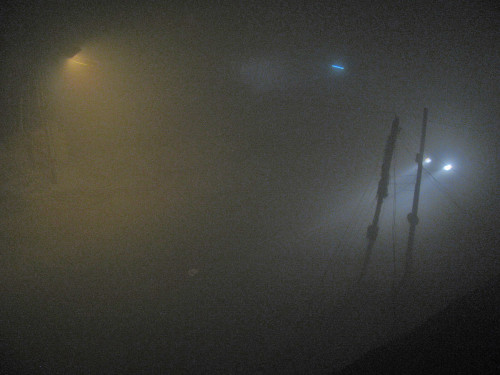
Winter morning fog in Gurgaon. Photo by us.

The thought that Delhi might be anything other than hot never crossed our minds as we were packing our suitcases back in Brooklyn. Knowing only that there was a monsoon season, we expected eleven months of unbroken heat and one month of unbroken rain.

Midway through our first December, we knew we were wrong — a fact proven by the two electric heaters we’d purchased, along with two thick wool blankets to wrap around our shoulders for the moments we’d have to exit the narrow arc of air that the electric heaters kept warm.

fog2
Nighttime winter fog outside our flat. Photo by us.

Even then, the blankets barely compensated for the drafts that radiated through our loose-fitted windows and wrapped their icy grips around our very souls.

The marble floors that promised to echo the air conditioning in the summer were like a barefoot trek across an ice-covered lake, even while wearing three pairs of socks.

Going to the bathroom made us wish we’d moved into a flat with a squat toilet — anything other than sitting on that icy seat.


Photo by Flickr user Mayank Austen Soofi.

The dropping temperature had been a gradual revelation. At first, we’d needed only a comforter for the bed. Then we needed sweaters to wear around the house. Before long, we were buying hats, and then scarves, and then gloves, and then jackets, and then those electric heaters that we’d turn on in the bathroom ten minutes before shower time to blast away the walk-in freezer now attached to our bedroom.

Late night rides in open-air autorickshaws made us regret not leasing our own car; huddled together in the back seat, staring at the driver’s back through our own fogged breath, we’d envy his sweater and his surreptitious warming sips from the small bottle hidden in his breast pocket.


Photo by Flickr user Sunil D

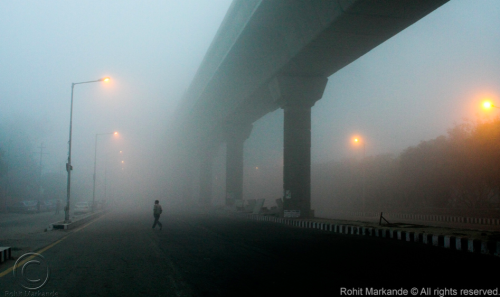
But winter also brought splendor to Delhi, fleeting though these moments were. On the coldest mornings, getting up early to beat the traffic let me appreciate the magnificence of Delhi’s fog; on MG Road, segments of the Metro would disappear into of the vanishing point, majestically suspended in the sky, more massive and beautiful than they ever seemed on a clear day.


Photo by Flickr user Rohit Markande

The air on MG Road was thick and still, broken only by brilliant flashes of blue as kingfishers flitted across the roadway.

Passing through Gurgaon, the skyscrapers were hidden behind grey clouds, an invisible presence somewhere beyond the black silhouette of the electrical towers that abutted the street.

The weather never went below freezing in Delhi, so it never snowed, which meant Delhi had all of the misery of winter but none of the fun. But its winter was relatively short, and by February the nights were comfortable, the days were pleasant, and the winter fog was no longer delaying midnight flights until six AM. And another summer was about to begin.

our double Delhi Christmas faux pas

To celebrate our first Christmas in Delhi, we invited our friends and coworkers over to enjoy as authentic an American Christmas as we could manage, given the fact that neither of us are practicing Christians, that we couldn’t purchase half the food we’d normally eat on the holidays, and that we didn’t have an oven for roasting anyway.

Christmas in an Indian market. Photo by Flickr user DanBrady.

Our menu was a mishmash of our traditions: Jewish potato latkes, hot mulled wine, ginger cookies, sweet potato casserole (technically a Thanksgiving dish, but we didn’t tell anyone), and homemade eggnog. Assembling the feast required great effort—beyond our lack of oven, we were also lacking a food processor, an electric mixer, and the assertiveness to ask Ganga to help with the labor. So the hours preceding our party were spent peeling yams for the casserole, grating onions and potatoes for the latkes, and beating cream for the eggnog.

When our second Delhi Christmas rolled around a year later, we wanted to recreate all of the fun but with none of that effort. So, rather than cook everything ourselves, we decided to make the event a “potluck”: we asked each guest to bring a dish to share with everyone else.

This request was not very well received.

Within a moment of sending my email invitation at work, some coworkers descended upon my desk to mock my backwards American practices. “Who brings food to a party?” Sonia demanded as the others nodded. “You’re supposed to have food served to you!”

And so we nearly ruined another Delhi Christmas.

You see, our first Christmas party had nearly ended as soon as it began. Having spent all that time preparing our feast, we wanted our guests to eat it while it was hot. So we’d assembled it buffet-style on our dining room table, and we’d handed out plates practically as soon as the guests arrived.

The American attendees ate. The Indian attendees refused.

“No, man,” I remember Pankaj telling me as he handed the plate back. “I’ll eat later.”

And the more we insisted they eat, the more uncomfortable they grew. The retreated into groups. They eyed us suspiciously. They whispered amongst themselves.

We didn’t know what we’d done wrong. And it wasn’t until we were guests at a few house parties ourselves that we finally figured it out.

In Delhi, we finally learned, there is generally an order to how parties progress: you drink, you  dance, and then you eat. The booze loosens you up, the dance floor bounces you around, and then, in the wee hours, the food calms you down for the ride home.

Food is the signal that that party is over.

And it’s a universally understood signal at a party. Somewhere around 2 AM, we’d hear the doorbell over the sounds of Dard-E-Disco. Delivery from the dhaba! The living room floor—which, until that moment, was being eagerly bhangra’d upon by even the most uncoordinated gora—suddenly empties.

Kebabs are imbibed. Chinese noodles are slurped up. And then goodbyes are said, handshakes are exchanged, and the ritual drunk driving begins.

Behold my uncoordinated bhangra!

American parties usually begin with food. Indian parties usually end with them. The difference creates a dramatic incongruity: at our first Christmas party, our offer for guests to eat right away was interpreted as a request that they leave.

Fortunately, that party survived the faux pas. But a year later, at our second Christmas, our cultural ignorance threatened the party before it even began. Because if serving food implies that it’s time to go home, what were we implying by asking them to bring their own signal to leave?

Once my coworkers pointed out my foolishness, I quickly sent out an email clarifying the potluck concept. And fortunately, on the day of the party, we managed to assemble quite a spread.

Still, attendance at the party was half of what we hoped. And we found out later that the timing of the meal wasn’t the only thing we’d messed up. My coworker Anurag told me of his mother’s reaction when he’d mentioned the invitation to her: “At what kind of party,” she’d demanded incredulously, “do you have to bring your own food??”

Which actually made us feel better. We could chalk up the weak attendance as a reflection of the unfamiliarity of the potluck concept—and not of our friends’ and co-workers’ actual opinion of Jenny and I.

A book. Not THE book, but A book…

I don’t want to begin this essay with a revelation that the publication date for my book has been pushed back again.

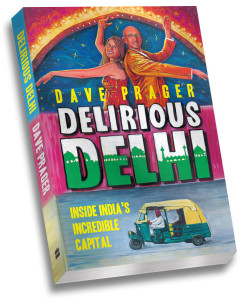
So I won’t. Instead, I’ll share this picture with you.

That’s a book. And my writing is contained therein. Close enough, right?

Sure. To North India, With Love is a great book. Published by ThingsAsian Press and edited by Nabanita Dutt, it is a travel book — but not in the Lonely Planet sense. It doesn’t catalog restaurants or hotels or tourist traps; instead, it presents snapshots of moments. It’s a collection of about 40 short essays that together paint an affectionate portrait of North India, presenting experiences that have mattered to the travelers who came before you. And it couples those experiences with just enough information for you to run off to Dehradun or Allahabad or Old Delhi and create an experience of your own.

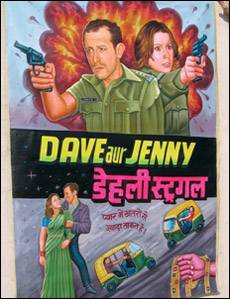
If you’re in the US, you can buy it on Amazon; hopefully it’s available in Indian bookstores as well. Three of my essays have been re-edited and republished in this book. These include the story of Ruksana, my experience with Karim’s tandoori bakra, and a retelling of the story of our famous Bollywood poster. Here’s an excerpt:

I came back the next weekend with my father and the money for the deposit. Manesh wasn’t there. This time, we sat at the rickshaw stand with a drunk mechanic who kept telling us, “I speak English tutti-frutti,” and “Vijay is my brother,” and “You want some whiskey?” Finally Vijay and Ranjeet, his English-speaking partner, pulled up. We discussed again the poster while the drunken mechanic danced around, sent a peon for soda, and interrupted us with “Vijay famous artist!” and “My cousin-brother!” and yet more “You want whiskey?”

Jenny and I had anticipated a small poster, perhaps two feet in length — after all, our main goal was to reprint it on a postcard. Vijay, however, insisted that his work could be no less than five feet tall. We agreed, the peon returned, and we celebrated with Pepsi and whiskey. As we were walking out, the mechanic turned to me to whisper conspiratorially, “I speak English tutti-frutti.”

You can read the full essay on the ThingsAsian site. And you can see a picture of the poster that I’m talking about in this unrelated article that appeared in the Gujarati newspaper, Divya Bhaksar. Here’s how it looked in print:

After the article came out, the author assured us that it was saying nice things. But is it? As bad as our Hindi is, our Gujarati is worse. Does it complement our writing style? Does it repeat that last February’s denunciation of our imperial arrogance? Does it accuse us a pivotal role in the 2G scam?

Nope. Nice things. We know that thanks to my coworker Pankaj’s friend Vimal, who relieved our fears (Thanks, Vimal!) with an abridged translation that I’ll paste below:

Delhi through the eyes of a Foreigner

One American couple came for 3 years to stay in Dil walon ki Delhi, and what they saw here it is.

The author starts off by writing Osho Rajneesh’s saying: “the best way to hide anything from a person’s eyes is to place it in front of his eyes.” He talks about India in the same way: child beggars pulling arms of the people on the streets, a bridegrooms procession in midst afternoon with the mercury soaring at 42 degrees Celsius, blaring loud speakers in the night enough to tear one’s ear drums, crazy honking vehicles, little boys serving tea in dirty clothes, pirated dvds and cds selling in the open, choked-full buses and trains, cars parked in no parking zones, etc.

Then he goes on to say: Lets meet Dave & Jenny, who came to Delhi in Nov 07. They did not come to see the Taj, but for the work project and to work for an NGO, and chose to see Delhi through their eyes, rather than using a conducted tour.

He talks about their blog and reproduces the same. He begins with the matrimonial ad in Mumbai, and then goes on to their trip to Daryaganj to make a film poster for themselves. How they managed to find Vijay and how Vijay was surprised they managed to find him. Vijay printing a 6 foot poster instead of a 2 foot poster requested by them and how thrilled they were. The poster is reproduced along with the article.

He also narrates how “do one thing” fascinated and amazed Dave and Jenny.

It’s nice to be appreciated. And that warm feeling of appreciation gives me the fortitude to sigh and bare to you the pain I mentioned at the beginning: our book release has indeed been pushed back to April, and possibly later. Apparently there are simply too many books about Delhi on the market right now, thanks to the tourists who failed to materialize during the Commonwealth Games.

Which means the release parties will be postponed. Which means we won’t be visiting Delhi in February. Which means our memories of the hot winter carrot halwa steaming outside the Jama Masjid will, for now, remain just that.

Sigh.

The good news is that we should be revealing the cover soon. We haven’t seen it yet ourselves, but we do know that the publisher was at one time talking to Vijay the Bollywood poster painter about doing the art. And if that’s indeed the case, then here’s a sneak peak at the source material we provided him:

Hopefully Vijay can once again do us justice.

(And if this picture at all convinces you that I’m capable of writing 250 entertaining pages about life in Delhi, then make sure you email us to join our book mailing list. We’re in discussions for something like nine release events in six Indian cities, and we’ll be inviting everyone on the list. Whether it takes place in April or July or sometime in the 23rd Century, you don’t want to miss out.)

an open letter to our omniscient friend, Shahrukh Khan

(Astute readers will remember when we stumbled upon SRK. The letter below details what we now know to be the TRUE meaning of that experience.)

Dear Shahrukh,

I use your first name because I see us on intimate terms.

That’s not because you’re the spokesperson for every single brand that has ever advertised in India, though. No, it’s because you and your marketing people invested millions of rupees to target my wife and I in your most clever image campaign to date.

Money well spent, I’d say. It’s amazing how perfectly your team pinpointed our habits.

You knew that Jenny and I would use that pleasant February morning to wander an area of Delhi we hadn’t yet explored.

You knew we’d stop to gape at the ice factory.

And you also knew we’d stop again to write in the dust on a nearby car.

These conclusions were critical to your strategy, because they predicted the exact moment when we’d reach Lala Hardev Sahai Marg. With that knowledge, you knew exactly when to flip on the red light so we would impatiently turn down Zorawar Singh Marg instead.

Which meant you knew exactly when to clear away the clouds so that we’d walk under the trees to avoid the sun.

Which is where you knew to place your ads.

What perfect research your team did! You’d learned that your Om Shanti Om posters had imprinted your ab muscles so indelibly into our skulls that we’d conditioned ourselves to ignore all subsequent posters of you. Which is why you chose NOT to hang a poster, but instead to drape strips of film over those trees in the exact configuration we were sure to notice.

khan

Just as you predicted, we stopped. Just as you predicted, we saw your face. Just as you predicted, we took pictures.

And now, just as you predicted, I’m praising your cleverness on our blog.

You, sir, are a marketing genius. You, sir, are the king of all media. You, sir, are—

Wait.

What if… what if this article isn’t your goal at all? What if this whole thing has been a clever campaign… to reach whoever is reading these words right now?

Reader! You’re reading this because Shahrukh KNEW you’d read it!

Did you just scratch your nose? Shahrukh knew you’d do that, too!

You have to ask yourself: what else does Shahrukh know you’re going to do? And what does Shahrukh want from YOU?

Shahrukh, I’m frightened by your omniscience. I want to cower under my desk. Except… you already knew that, didn’t you? Who knows what you have waiting for me under there?

Your unwilling pawn,

Dave Prager

Are India’s malls influencing India’s marriages?

“The malls are changing the culture,” our friend Monali told us a few months ago. We’d asked her to describe some of the changes she’d seen in India over the last few decades. This is a question we’ve asked many of our Indian friends; hers was an answer we hadn’t yet heard.

Saket Citywalk Mall in Delhi. Photo by Flickr user nithinkd.

We’d already learned that Delhi’s social life used to revolve almost exclusively around the home. Jenny’s boss Renuka told us of growing up in a Delhi in which there were almost no restaurants outside the fancy hotels, which meant that most gatherings of friends and family took place in each others’ homes. In this situation, children were never far from the watchful eyes of parents and neighbors.

Times have changed, obviously. As the 800+ Café Coffee Day outlets now open across India will attest.

Café Coffee Day in Mumbai. Photo by Flickr user ianjacobs.

And all those coffee shops, restaurants, and malls have made it easier for teenagers to do teenage things without that historically intense parental supervision. Especially the malls, as Monali told us. So now, with teenagers given widespread access to venues for hanging out on their own terms, a sea change could be cresting:

  1. Boys and girls hang out.
  2. They go on dates.
  3. They fall in love.
  4. They fall out of love.
  5. They fall in love again. (In other words, relationships are made and unmade in accordance with the fleeting whims of fickle teens — that is, independent of parental influences.)
  6. Which means teenagers grow accustomed to asserting control over their love lives.
  7. Which means they push back on traditional parental authority in this realm.
  8. Which means that India finds itself on the path to American-style marriage. (And, inevitably, American-style divorce rates.)

There have been many stories about the repercussions on India’s traditional family structure of children now routinely out-earning their parents. With such economic independence, it’s said, the decision-making role of the patriarch is significantly diminished. (And this goes double for women.)

But Jenny and I have only seen this shift documented upon the point of the child entering the workforce — which is, of course, after the child’s schooling. But if Monali and that conjecture above is correct, then the malls are breeding independence into teens during the schooling years.

Which means there are now two forces at work: economic independence in the twenties that builds upon social independence in the teens. So what kind of change will this bring?

pune under siege: a gorgeous indian sci-fi music video

A few months ago, I read Cyberabad Days by Ian McDonald, a collection of short science fiction stories set in the India of 2047. It explores and India of robots and avatars and biryani and chai, of border wars and water rajas, of holographic djinns, of arranged marriage and Nepali child goddesses, of inscrutable Indian politics simultaneously transformed and unchanged by fantastic technology.

It’s far too rare to see India interpreted through the lens of genre — I can only think of Cyberabad Days, Delhi Noir, and Conan O’Brien. Fortunately, BoingBoing recently posted another example: a District 9-esque music video for the band You Say Party. Gorgeous shots of what looks like Pune shattered by menacing mosquito-masked brownshirts chasing a girl and her Macguffin.

If you want to go deeper, here’s an interview with the director, and an interview with the artist who designed the costumes.

Does anybody have any other examples of India through the lens of genre? And I’m not talking about Outsourced.