Category Archives: thinking about delhi

Bye-bye, Blueline! Next: a golden age for Delhi buses?

Towards the end of my parents’ two-week visit with us in Delhi, my mom decided that she wanted to go to Aurobindo Market. Not a challenging task, on the face of it: a short walk comprised of two right turns and two left turns. My mother was certainly both physically and mentally capable of accomplishing it by herself. But I refused to let her go alone.

Because to get to Aurobindo Market, she would have had to cross Aurobindo Marg. And on Aurobindo Marg, there were Blueline buses.


Photo by The Delhi Walla, Mayank Austen Soofi.

The Blueline is tragically and justifiably notorious. The 1,600 buses running on 142 routes killed over 115 people in 2008 and over 1,000 people during the first ten years of this century.


Photo by The Delhi Walla, Mayank Austen Soofi.

I first became obsessed with the Blueline when I researched why they were killing so many people: not because the drivers are bloodthirsty madmen, but because the economics behind the system created deadly incentives for the drivers. (Each driver rents his bus for the day, which means he generates profits only after he’s picked up enough passengers to cover his costs. So he has to drive as aggressive as possible not just to make money, but to stay ahead of the competing Blueline drivers on the same route, who are each trying their damnedest to overtake him and scoop up his awaiting passengers.)


Neither owner nor driver have much incentive to invest in the upkeep of their vehicle. Photo by The Delhi Walla, Mayank Austen Soofi.

And while my mother and I had a lovely time shopping together at Midland Books in Aurobindo Market, the Delhi government has been working frantically to eliminate the careening deathtraps that made me accompany her to begin with. Not because they are against sons politely helping mothers cross the street, but because the city will be a far safer place without them.

Laws alone weren’t enough, of course. Every Blueline driver knew and feared the penalties of rash driving: not just legal deterrence, but angry mobs that routinely attack drivers who don’t frantically abscond the scene of an accident. Laws and vengeance haven’t impacted safety, they’ve just encouraged Blueline owners to legally insulate themselves from the actions of the drivers to whom they rent their buses.


Photo by The Delhi Walla, Mayank Austen Soofi.

The solution, Delhi’s government realized, was to eliminate the owner/renter framework of busing and replace it with an employer/employee relationship.

This meant decoupling profits from passengers.


Photo by The Delhi Walla, Mayank Austen Soofi.

The city has been working on this for years. The Bluelines were first supposed to be phased out in July of 2009. But every time the city made a move, the “Federation of Blueline Buses Operators” got the courts to make a counter-move. Now, though, it finally seems like the Blueline is destined for the rustheap of history. After some frantic legal back-and-forth in recent weeks — the city eliminated the Blueline, the courts reinstated it, the city eliminated it, the courts reinstated it — the latest decree looks like it’s going to stick.

Delhi High Court on Monday declined to restrain a government notification to phase out the capital’s Blueline buses notorious for their reckless drivers.

So what about all the commuters who rely on the Blueline to get around? Good news: all those fancy new buses the city bought for the Commonwealth Games are about to hit the streets:

According to senior DTC officials, about 1,400 buses, which were deployed on the Commonwealth Games duty to ferry athletes, delegates, officials, media and security personnel to the Games Village and the venues, will be back on road for ordinary people from October 24.

And that’s just from the public sector. The private sector is getting involved, too, including SpiceJet and Kingfisher.

According to the plan, the Delhi Transport Corporation (DTC) is to run 60 percent of the buses while in the rest 40 percent, the entry of corporate houses is permitted.

But wait — won’t those new bus companies operate under the same old profit-per-passenger incentives? The crumbling Bluelines might be replaced by shining new Tata Motors coaches, but won’t the drivers still be racing down the roads? Will the only improvement be that the people who get nailed don’t have to worry about rust stains on their clothes?

No. There’s more to it. This isn’t just a change of ownership. The city is actually changing the economics of running a bus company.

The Delhi government will provide the companies Rs.27-42 as earning per kilometre even when the service runs into losses, but it will take the ticketing amount.

These are very different incentives. From the narrow standpoint of the bus/passenger relationship, they’re probably not perfect incentives. (One could imagine bus owners encouraging their drivers to take meandering trips to run up the mileage reimbursement while picking up no passengers at all.)

But from the broader perspective of making the city safer and the commute more reliable, this framework is a huge improvement. Especially when one learns that the drivers themselves will be city employees, and the buses will be monitored by GPS.


Photo by The Delhi Walla, Mayank Austen Soofi.

All of which means that when we go back to Delhi in February for the book release events (we’re in talks for at least nine parties in six Indian cities!), it might be safe to cross the street. In fact, given that most of these new coaches are-conditioned, we might even travel to our events by bus.

how to enjoy Delhi during the Commonwealth Games (despite what the media says)

According to the press, any foreign visitor at the Commonwealth Games will inevitably sit in a puddle of red betel spit, and then  contract dengue, and then die in a bridge collapse (while, back at their hotel room, a dog is casually tracking paw prints across their mattress).

As two people who lived in Delhi, we can tell you this: the media tends to exaggerate.

For international events like the Commonwealth Games, the media normally provides foreign visitors with practical travel tips. But since they’re too busy hyperventilating about the Impending CWG Apocalypse, that responsibility defaults to us.

And this is an important responsibility. When Jenny and I first stepped into Indira Gandhi International Airport, we were slathered in sunblock and clutching the Lonely Planet like the bible, but we were completely ignorant of the city’s unique character. So, for the benefit of those few tourists not frightened away by the terrified bleating of the global press, we present a few tips for making the most of delightful Delhi: what we know now that would have helped back then.

==============

Packaged stuff has a price on it. It will come to pass in Delhi that you will get thirsty. When that happens, you will buy a drink. And every so often, someone will hand you a bottle and tell you it costs 100 rupees.

We Westerners are used to being overcharged in airports, stadiums, and tourist areas where competition is limited and prices jacked up. We Westerners are also accustomed to prices being set by Management, and thus closed to both customer negotiation and merchant discretion. In Delhi, though, where neither the former nor the latter are usually the case, savvy vendors have learned of our tourist expectations. And they try to use them to their advantage.

And so you may one day ask a vendor, “Pray tell, how much for this large bottle of Aquafina water, kind sir?” (You’ll of course be speaking with the exaggerated politeness for which Western travelers are known the world over.)

“20 rupees,” the honest vendor will reply.

“100 rupees,” the sly vendor will whisper, hoping you will believe him.

And at first, Jenny and I did. In our culture, prices are inviolable and gouging is expected in tourist areas. So, finding ourselves thirsty at Qutub Minar or the Red Fort, we’d shrug and hand over whatever was asked. Until we learned about the MRP.

And now you, Delhi traveler-to-be, know about the MRP, too: packaged goods are usually printed with the Maximum Retail Price.

An honest vendor will charge at or below the MRP. If you encounter a sly vendor attempting a 100-rupee gambit, just politely examine the bottle for the MRP, point it out, and smile. He’ll adjust his price accordingly.

==============

Smiling should be your default response. Hidden in our first travel tip was our second: smile, relax, and go with it.

Foreigners are, well, foreign in Delhi. So sometimes you’ll get stared at. Sometimes you’ll get cheated. Sometimes you’ll get pushed to the front of a queue even though a dozen equally-worthy people are in line in front of you. Sometimes someone will ask to shake your hand for no reason. Sometimes someone will shove a baby in your arms and pose you for a photo.

In many of these cases, you will feel uncomfortable. You’ll want to cross your arms, furrow your brow, and scowl your worst.

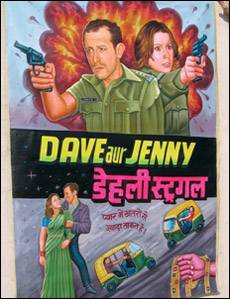
Don’t. No matter what happens, smile. Relax. Have fun! Go with it. Nothing bad will happen to you when you do, but you will miss many great experiences if you don’t. Jenny and I made a rule when we moved to India: no matter what we were presented with, we would smile and go for it. Which is how we got our famous Bollywood painting. Which is how Jenny rode with Delhi’s only female autorickshaw driver. Which is how I held a cobra.

No matter what happens to you in Delhi, smile and go with it. You’ll have much more fun that way.

==============

Try the sidewalk chai. Delhi is paradise for street food. It’s also heaven for Escherichia coli. To balance the former with the latter, you may want to avoid the gol gappas — but make sure not to miss the sidewalk chai. Pick a vendor who has other customers, and as long as you see it boiled before your eyes, you have nothing to worry about. Give the guy five rupees per cup. He may or may not give you change. (Usually chai is only three or four rupees, but the two extra rupees mean a lot more to him than they do to you.)

==============

Ask to take pictures. The subjects that Jenny and I photographed the most were things most Indians wouldn’t think twice about: vegetable peddlers, sidewalk barbers, and sari-clad aunties riding scooters side-saddle with more dignity than we could ever hope to muster.

And we know that our photo shoots were as baffling to our subjects as it would be if a tourist burst into Starbucks and started snapping pictures of the baristas back home.

Which is why our early photos are filled with people looking at us with surprise, with confusion, or even with aggression.

Then we learned the trick: before you take a picture, ask permission. That means make eye contact, raise your camera, and smile. If they say no, respect them. If they say yes, do your thing, and then show them the picture once you’ve snapped it. It’s a moment of bonding that both you and your subject will enjoy—and you’d be surprised who has an email address and would like a copy.

img_6739

==============

Three Hindi words for autorickshaw drivers. Bas—pronounced “bus”—means stop. Seedha—pronounced “seeida”—means go straight. And finally, kitne? means “how much?” You probably won’t understand the driver’s answer when you poke your head under the canopy and ask him, but that’s not why you ask in Hindi. You ask in Hindi to make him doubt you’re a tourist fresh off the plane; that way, he’ll be far less likely to try the ol’ three-hundred-rupees-to-Connaught-Place trick.

(And if a driver ever does quote you some ridiculous fare, remember the lessons from above. Smile and politely disagree. If he doesn’t change his price, walk away. You’d be surprised how reasonable he’ll a driver becomes when he sees your back receding.)

Here are many more tips for taking autorickshaws in Delhi. And here’s a bonus: for the ultimate weapon in negotiation, learn how to say bhaiya.

==============

Drivers don’t always know where they’re going. And that doesn’t matter in the slightest. They’ll still get you there.

==============

Don’t be afraid to take cycle rickshaws. Cycle rickshaws are weird for westerners. It’s challenging for us to accept another human being working so hard for so little to enable our own laziness. But if there’s one thing a rickshaw puller hates more than pulling customers, it’s not pulling customers. This is how they earn their living, and they want your money.

It’s a bit more challenging to negotiate a fare with bicycle rickshaw drivers, because they usually speak less English than the autorickshaw drivers. If you discover there’s been a disagreement with the price, think about your health insurance package and then think about his, and fork over a reasonable difference.

==============

Don’t miss! The Dilli Haat shopping bazaar (you can bargain, despite what they say; and they use purified water, so you can try the gol gappas.) Appams with hot coconut milk at Saravana Bhawan. Kulfi falooda at Roshan di Kulfi. The lovely ruins at Hauz Khas Village. The Sunday book market. (Or did they shut it down?) The Nehru Place computer market (but not on a Sunday). The old city, the old city, the old city: throw out your Lonely Planet and get as lost as you can. You won’t regret it.

==============

If you want to do something nice. Donate to Pardada Pardadi or Udayan Care. They’ll put it to good use.

==============

There are many, many more Delhi travel tips. Too much for this humble article. Perhaps some of our readers will submit their tips below…?

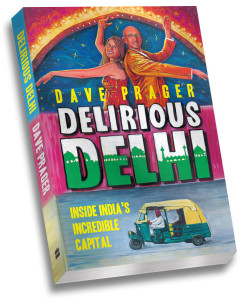
If you enjoy this snapshot of Delhi, good news: we have a book about our Delhi experiences coming out in January!  It’s a witty travel memoir of expat life in this delirious metropolis. Do one thing: send us your email address or follow us on Twitter so we can invite you to the Indian and American release parties!

18 and out? Not in India. (A study of family life.)

At ninety years old, my grandfather was on his own. His nearest child, my aunt, was 120 miles away. He cooked for himself, he cleaned, he paid his bills, he drove himself to breakfast with his buddies every morning, and he beat me at cards every single time. And while my family certainly wanted him to move closer to one of us—he refused to leave the town in which he’d lived all his life, even though his last kid moved away in 1976—we all admired his independence.

His independence horrified my Indian friends.

While Ganga and I worked hard, Grandpops watched over us. Click for a bigger picture. To explain the pose: I’d asked Grandpops to pretend he was a rapper, and this was his response.

I’d see shocked condemnation in their eyes when I’d tell my Indian colleagues about Grandpops. What is wrong with the Prager family, they’d obviously think, that we’d so coldly abandon our patriarch? And what kind of family would ever let a grandparent live alone in the first place?

This leads to another of the cultural variances this blog dutifully documents: in America, family life generally has an expiration date. In India, family life generally takes precedence over everything.

For most Americans, this expiration date is the light at the end of our tumultuous teenage tunnel. Our 18th birthday pulses in our adolescent minds, because that’s the accepted age at which we either set out for university or set out on our own. In my family, 16 meant it was time for a job, 18 meant it was time for college, and 22 was the first day of the rest of our lives (“You’re off the payroll,” as my dad always put it.)

This isn’t unusual: most American families break up by the time the kid is old enough to drink. Some see their kids move to condos in the same city; others, like our parents, watched their kids run off to Boston, San Francisco, Washington DC, and India. My grandfather’s children scattered across the country in a similar manner. Even when my brother briefly moved home after university, the first thing he did was find his own place. Living at home is not in our cultural vernacular.

In India, the opposite: families generally stick together until marriage or economics force them apart. Houses typically contain multiple generations of multiple branches. If the American narrative is “18 and out”, the Indian narrative is three patrilineal generations under one roof, with the eldest son regularly consulting architects for new floors to house additional wings of uncles.

Most of our unmarried friends and coworkers lived with their parents, and most expected to remain with them until a job moved them to a different city or, in girls’ cases, a marriage moved them into a different family’s orbit. A few coworkers lived with their parents in the far outskirts of Delhi, despite the 2-3 hour commute this obliged them in each direction. The few bachelors or bachelorettes we knew who lived on their own did so only because their families were in Orissa or West Bengal; only a tiny fraction of our friends or coworkers lived on their own even though their parents were also in Delhi.

Observing this, we developed generalizations: in India, family comes before self. In America, self comes before family. In India, parents make decisions on the child’s behalf long after he or she has embarked on his or her career; in America, the child’s struggle for independence begins the moment they enter the teenage years.

In the long run, this means that Americans make decisions with little but advice from their parents, for better or (often) for worse, while Indians spend their first three decades knowing their holiday plans, career decisions, and sometimes even wardrobe choices are subject to parental veto. The most extreme example of this deference to ancestry is in marriage, of course: very few American children would ever allow themselves to be sat down, handed a cup of tea, and informed of their recent betrothal. Americans usually marry regardless of their parental approval—indeed, when parents express reservations about a marriage, that usually just strengthens the resolve of the children to go through with it.

Our divorce rate attests to this.

In India, the consequences of disobeying are staggering. We knew one thirty-something girl who was in love with a guy—heads-over-heels, stand-up-in-a-restaurant-and-shout-it in love—and the guy reciprocated. But her family didn’t approve. And when she made her wishes known to her parents, she was given a simple choice: the man or the family. She could not be part of both.

In America, self is more important than family. Everyone in my family wanted Grandpops to move closer to them, but none of us were willing to give up our own lives to live with him in Connecticut. In India, where our friend had no choice but to break off her relationship with this man she loved, family is more powerful than anything.

Rags to Pads featured on NPR!

Back in summer 2008, Jenny and I raised money to help Pardada Pardadi buy a machine that manufactures menstrual pads. Pardada Pardadi, as many of you remember, is the charity that Jenny worked for: they run a school for poor girls out in rural Uttar Pradesh. But their area has few economic opportunities for its graduates. Our fundraiser was meant to solve this problem and address a serious health problem at the same time:

Pardada Pardadi is located in an area of Uttar Pradesh so poor that many women can’t afford pads during their period. So they typically use rags torn off old saris to staunch their flow — a practice that risks terrible infection every period from puberty to menopause.

We are raising $5000 to help Pardada Pardadi buy a machine that makes sanitary pads and support two of the school’s graduates as they start a pad-making business. The goal is to create a self-sustaining business that sells pads at around 25 rupees for packs of ten — simultaneously bringing an affordable and sanitary option to women on their periods while creating economic opportunities for women in an area that has next to none.

We raised over $5000, with many donations coming from readers of this blog. That money was matched by a grant from the DuPont corporation. The machines were purchased, the business was created — and now the story has been picked up by NPR! Read their article here.

We’re very proud to have played  apart in creating this opportunity. If you’re interested in Pardada Pardadi’s broader mission (like preventing the marriage of 13-year-old girls), we encourage you to donate.

ideas for India’s future

Jogging through the sweaty streets of Singapore with this talk on my iPod, I surprised the mynah birds with a few shouts of agreement to what Nandan Nilekani has to say in the video below. It’s well worth fifteen minutes of your time.

If you would rather read than listen, you can find a transcript here.

girl stars

We’ve mentioned our involvement with Pardada Pardadi before: they’re the girls’ school for which we’ve raised money, ran campaigns, built websites, and, in Jenny’s case, worked for in the Delhi office. Our experiences with them in the villages near Anupshahr helped us grasp a bit of the challenges that girls in this area have to overcome just to go to school and not get married in their early teens.

Which is why we enjoyed this video so much. It’s not only inspiring, it’s entertaining and funny and really well-shot.

This video is part of the Girl Stars campaign from Going To School India. There are fourteen other videos just like it, plus beautiful books based on the movies.

It’s rare to see such a broad campaign of such beauty and purpose. Spread the word!

self-respect

“My mom has given my matrimonial ad,” my coworker Anurag told me one day. “One of the respondents is an account manager with an ad agency in Mumbai. Drawing seven lahks per annum! That’s double my salary. So I told my mom, ‘I don’t think she’s my type.’”

Not your type…? I was dumbfounded. What could be a more perfect type than a wife who pulls in a boatload of cash?

So I argued with him. I tried to explain the benefits of that arrangement from the perspective of his future financial security, to say nothing of all the extra time he’d get to watch TV. But my arguments of real estate prices, private school tuition, and syndicated sitcoms didn’t make a dent. He wanted to be the breadwinner because, well, that’s what men were supposed to do. “What about my self-respect?”

“My friend,” I said, “you can drive your self-respect around in a gold-plated BMW.”

He laughed. And then: “You have absolutely no male ego. Are all American men like that?”