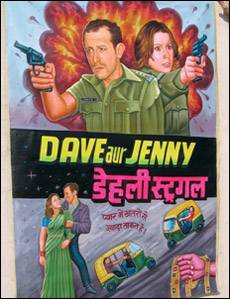
The manuscript is finally finished. Ten months after I started writing it, three months after I quit my job to work on it full time, and two weeks after I locked myself in the spare bedroom for a marathon of fourteen-hour writing days, it is done.
The book is a humorous travel memoir of expat life in Delhi — an all-encompassing look at the city from the perspective of two New Yorkers who get to know Delhi even as the city changes before their eyes. The final manuscript is twelve chapters and 108,033 words long — and lest you think it’s 300 pages of long-winded babble, here’s the statistic I’m most pleased about: 55,969 words were cut in the writing and editing process.

If all goes well, it’ll be hitting stores in India at the end of the summer beginning of December, published by HarperCollins India. We’re still looking for our US and worldwide publishers — let us know if you have any contacts.
Until then, we’ll continue to post new essays this blog, of course, as well as our Twitter account. And make sure you send us your email address! We’ll make sure you get announcements, news, and invitations to the launch parties.
Here’s an excerpt from Chapter 5, which is about our favorite subject: food. Enjoy!
One item of mine that my coworkers would never want to share was the carrot sticks I’d snack on to avoid the temptation of pre-lunch raids into my tiffin. Sometimes I’d coerce my coworkers Anurag or Soumya into eating one by telling them that, “In America, it’s considered an insult to my ancestors if you refuse to eat my vegetables.” They’d reluctantly agree and then scrunch their faces as they chewed. “Who eats raw carrots?” they’d ask me.
But raw carrots genuinely tasted better in India; in fact, all fruits and vegetables did. In the States, fruits and vegetables are bred to meet Americans’ demand for unnatural perfection: consumers prize produce that looks uniform and shining as if they rolled off a factory floor, with taste as a secondary consideration. We have huge white onions weighing a pound each but bland enough to eat like apples, consummate pink tomatoes with flawless skin and tasteless flesh, and green peppers that form rows of identical spheres but taste indistinguishable from celery. In Indian vegetable markets, the imperfection of unmediated nature is on full display: the vegetables are smaller, uglier, and more frequently blemished than those in America, but they’re far more flavorful. The tomatoes may be splashed with green and yellow patches, but they crunch deliciously in a salad. The onions may be smaller than softballs, but no American onion was ever sharp enough to make me cry when I cut it. And even the everyday green peppers—called “capsicum” in the local markets—were so full of flavor as to almost taste spicy.