Monthly Archives: September 2010

how to enjoy Delhi during the Commonwealth Games (despite what the media says)

According to the press, any foreign visitor at the Commonwealth Games will inevitably sit in a puddle of red betel spit, and then  contract dengue, and then die in a bridge collapse (while, back at their hotel room, a dog is casually tracking paw prints across their mattress).

As two people who lived in Delhi, we can tell you this: the media tends to exaggerate.

For international events like the Commonwealth Games, the media normally provides foreign visitors with practical travel tips. But since they’re too busy hyperventilating about the Impending CWG Apocalypse, that responsibility defaults to us.

And this is an important responsibility. When Jenny and I first stepped into Indira Gandhi International Airport, we were slathered in sunblock and clutching the Lonely Planet like the bible, but we were completely ignorant of the city’s unique character. So, for the benefit of those few tourists not frightened away by the terrified bleating of the global press, we present a few tips for making the most of delightful Delhi: what we know now that would have helped back then.

==============

Packaged stuff has a price on it. It will come to pass in Delhi that you will get thirsty. When that happens, you will buy a drink. And every so often, someone will hand you a bottle and tell you it costs 100 rupees.

We Westerners are used to being overcharged in airports, stadiums, and tourist areas where competition is limited and prices jacked up. We Westerners are also accustomed to prices being set by Management, and thus closed to both customer negotiation and merchant discretion. In Delhi, though, where neither the former nor the latter are usually the case, savvy vendors have learned of our tourist expectations. And they try to use them to their advantage.

And so you may one day ask a vendor, “Pray tell, how much for this large bottle of Aquafina water, kind sir?” (You’ll of course be speaking with the exaggerated politeness for which Western travelers are known the world over.)

“20 rupees,” the honest vendor will reply.

“100 rupees,” the sly vendor will whisper, hoping you will believe him.

And at first, Jenny and I did. In our culture, prices are inviolable and gouging is expected in tourist areas. So, finding ourselves thirsty at Qutub Minar or the Red Fort, we’d shrug and hand over whatever was asked. Until we learned about the MRP.

And now you, Delhi traveler-to-be, know about the MRP, too: packaged goods are usually printed with the Maximum Retail Price.
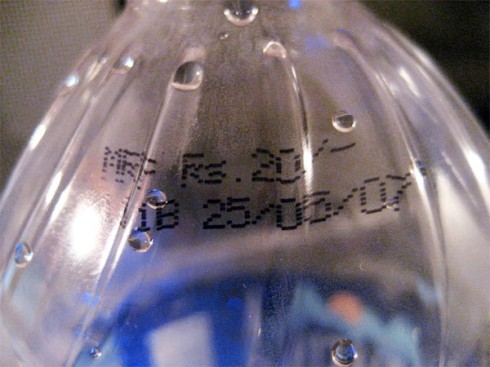
An honest vendor will charge at or below the MRP. If you encounter a sly vendor attempting a 100-rupee gambit, just politely examine the bottle for the MRP, point it out, and smile. He’ll adjust his price accordingly.

==============

Smiling should be your default response. Hidden in our first travel tip was our second: smile, relax, and go with it.

Foreigners are, well, foreign in Delhi. So sometimes you’ll get stared at. Sometimes you’ll get cheated. Sometimes you’ll get pushed to the front of a queue even though a dozen equally-worthy people are in line in front of you. Sometimes someone will ask to shake your hand for no reason. Sometimes someone will shove a baby in your arms and pose you for a photo.

In many of these cases, you will feel uncomfortable. You’ll want to cross your arms, furrow your brow, and scowl your worst.

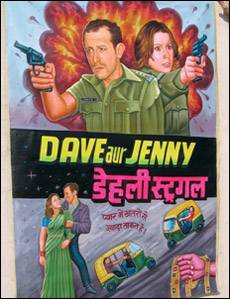
Don’t. No matter what happens, smile. Relax. Have fun! Go with it. Nothing bad will happen to you when you do, but you will miss many great experiences if you don’t. Jenny and I made a rule when we moved to India: no matter what we were presented with, we would smile and go for it. Which is how we got our famous Bollywood painting. Which is how Jenny rode with Delhi’s only female autorickshaw driver. Which is how I held a cobra.

No matter what happens to you in Delhi, smile and go with it. You’ll have much more fun that way.

==============

Try the sidewalk chai. Delhi is paradise for street food. It’s also heaven for Escherichia coli. To balance the former with the latter, you may want to avoid the gol gappas — but make sure not to miss the sidewalk chai. Pick a vendor who has other customers, and as long as you see it boiled before your eyes, you have nothing to worry about. Give the guy five rupees per cup. He may or may not give you change. (Usually chai is only three or four rupees, but the two extra rupees mean a lot more to him than they do to you.)

==============

Ask to take pictures. The subjects that Jenny and I photographed the most were things most Indians wouldn’t think twice about: vegetable peddlers, sidewalk barbers, and sari-clad aunties riding scooters side-saddle with more dignity than we could ever hope to muster.

And we know that our photo shoots were as baffling to our subjects as it would be if a tourist burst into Starbucks and started snapping pictures of the baristas back home.

Which is why our early photos are filled with people looking at us with surprise, with confusion, or even with aggression.

Then we learned the trick: before you take a picture, ask permission. That means make eye contact, raise your camera, and smile. If they say no, respect them. If they say yes, do your thing, and then show them the picture once you’ve snapped it. It’s a moment of bonding that both you and your subject will enjoy—and you’d be surprised who has an email address and would like a copy.

img_6739

==============

Three Hindi words for autorickshaw drivers. Bas—pronounced “bus”—means stop. Seedha—pronounced “seeida”—means go straight. And finally, kitne? means “how much?” You probably won’t understand the driver’s answer when you poke your head under the canopy and ask him, but that’s not why you ask in Hindi. You ask in Hindi to make him doubt you’re a tourist fresh off the plane; that way, he’ll be far less likely to try the ol’ three-hundred-rupees-to-Connaught-Place trick.

(And if a driver ever does quote you some ridiculous fare, remember the lessons from above. Smile and politely disagree. If he doesn’t change his price, walk away. You’d be surprised how reasonable he’ll a driver becomes when he sees your back receding.)

Here are many more tips for taking autorickshaws in Delhi. And here’s a bonus: for the ultimate weapon in negotiation, learn how to say bhaiya.

==============

Drivers don’t always know where they’re going. And that doesn’t matter in the slightest. They’ll still get you there.

==============

Don’t be afraid to take cycle rickshaws. Cycle rickshaws are weird for westerners. It’s challenging for us to accept another human being working so hard for so little to enable our own laziness. But if there’s one thing a rickshaw puller hates more than pulling customers, it’s not pulling customers. This is how they earn their living, and they want your money.

It’s a bit more challenging to negotiate a fare with bicycle rickshaw drivers, because they usually speak less English than the autorickshaw drivers. If you discover there’s been a disagreement with the price, think about your health insurance package and then think about his, and fork over a reasonable difference.

==============

Don’t miss! The Dilli Haat shopping bazaar (you can bargain, despite what they say; and they use purified water, so you can try the gol gappas.) Appams with hot coconut milk at Saravana Bhawan. Kulfi falooda at Roshan di Kulfi. The lovely ruins at Hauz Khas Village. The Sunday book market. (Or did they shut it down?) The Nehru Place computer market (but not on a Sunday). The old city, the old city, the old city: throw out your Lonely Planet and get as lost as you can. You won’t regret it.

==============

If you want to do something nice. Donate to Pardada Pardadi or Udayan Care. They’ll put it to good use.

==============

There are many, many more Delhi travel tips. Too much for this humble article. Perhaps some of our readers will submit their tips below…?

If you enjoy this snapshot of Delhi, good news: we have a book about our Delhi experiences coming out in January!  It’s a witty travel memoir of expat life in this delirious metropolis. Do one thing: send us your email address or follow us on Twitter so we can invite you to the Indian and American release parties!

three great things happening in Delhi right now

If those nine photos were the worst the BBC could come up with, then things are probably a lot better than they say. But it’s hard to argue with a steamroller of negative hype; the best one can do is change the subject. Which is what we hope to do by pointing out three terrific things that are happening in Delhi right now.

Words
First is the release of Mayank Austen Soofi’s three books this week. Writing as The Delhi Walla, Mayank is the best Delhi blogger in the business. He’s dedicated himself to telling the stories of one percent of each of Delhi’s 13 million residents, one person at a time. He finds interesting people, takes interesting pictures, and writes interesting stories about them. And the glorious people at Harper Collins India (the same glorious people who are publishing our book) recognized his genius and are releasing three volumes of his work:

We highly encourage you to rush out and buy them. They showcase Delhi from the highest and the lowest, from the richest to the poorest, with a sharp photographer’s eye and a true journalist’s knack for spotting the story that everyone else walks right past. While our own writing is dedicated to looking around and remarking upon what we see, Mayank does the opposite: he walks right up to people and asks them what’s really going on. And what he learns is always fascinating.

Art
A new art exhibition opens this weekend at the Lokayata Gallery in Hauz Khas Village. Here’s how they describe it: “It’s the golden autumn again. And Delhi is celebrating the season in a special way. With eight member artists, the Mirror Group presents its 14th exhibition — ‘MIRROR’. ‘MIRROR’ reflects our life, time and culture. Not just the flat-glossy surface, but the depths of it. Come experience the manifestations through paintings, sculptures, photography and various other media.”

We recommend this exhibit because one of the artists is Dipankar Paul, an extremely talented painter and one of our very good friends in Delhi. (He’s the one who taught us “Not your price, not my price.”) His work is terrific, and if all the other art in the exhibit is up to his standard, it’s going to be a very good show indeed. It starts today and continues through October 1st from 11 AM to 7 PM at Lokayata in Haus Khas Village.

Inspiration
Long-time readers of this blog will remember Rags to Pads, a fundraising effort Jenny and I put together to help address two problems at once: to improve sanitation and reduce disease in rural Uttar Pradesh, and to create job opportunities for women in a region where there are hardly any. We raised over $10,000 to help Pardada Pardadi Educational Society (Jenny’s former employer and our recommended NGO) purchase a machine for manufacturing menstrual pads, thus creating a business opportunity for the graduates for the school AND providing a market-driven alternative to current habits out there. It’s been going extremely well:

A few months ago, Rags to Pads was featured on National Public Radio. And now we’ve learned that Rags to Pads is being used as a model for an India-wide initiative!

The Union health ministry launched a Rs 150-crore scheme last month to promote menstrual health among rural adolescent girls. Unavailability and high costs of sanitary napkins deter menstrual hygiene in rural India. The scheme aims to provide one pack of six sanitary napkins at Re 1 to girls in the below poverty-line category. Those above the poverty line will get the pack for Rs 5.

…In Anupshaher in Uttar Pradesh, a girls’ school run by the nonprofit Pardada Pardadi Educational Society has installed a low-cost sanitary napkin unit. It employs its former students to run the unit, and sells a pack of 10 napkins to students at Rs 5. Members of the students’ families have also started to order. Now with the government scheme, these groups hope to expand their reach.

We’re honored to have played a part in kick-starting this effort, and we want to once again thank all our readers who donated as well! This is really good news.

=================

So, the Games are a week away. Put down the newspaper, because the headlines aren’t going to make you feel any better. Go read Mayank’s books, see Dipankar’s art, and revel in progress being made. There’s good news in Delhi, even if nobody is talking about it.

And when the Games start, don’t be surprised if things aren’t as bad as they say. They usually aren’t.

the sublime awesomeness of Tamil action

It was my boss Murali who first said to me the name “Rajinikanth”.

Murali is a natural storyteller. He’s utterly captivating, Murali, with one of those personalities that immediately commands any room into which he steps. Some of us tend to be indistinguishable from the wallpaper, but Murali is of the kind with an invisible spotlight trained on him at all times. So to see Murali get a faraway look in his eyes when speaking of a film hero — that man must be spellbinding indeed.

And what Murali told me about Rajinikanth was nothing short of unbelievable: something about shooting at a bad guy, realizing there were actually two bad guys, and then throwing a knife to split the speeding bullet into two pieces that each perfectly pierce the hearts of both bad guys.

While it may not have been that exact scenario, it was certainly in that general spirit. And whatever it was, my coworkers nodded in agreement at the assessment that Rajinikanth lived on a plane above us mortals. Oh, they knew of Rajinikanth. Everyone knew Rajinikanth. Except us Americans.

And we Americans are missing out.

After this conversation, I googled the name. The portrait I found didn’t seem particularly transcendent: a slightly pudgy man with an admittedly impressive mustache. But then I beheld the glory that you will experience in the two clips below. Part one:

Part two (it gets EVEN BETTER):

From there, I descended into the Youtube hole, and a world of Tamil cinema embraced me into its overdubbed bosom. Rajinikanth may be singularly glorious in Murali’s esteem, dear reader, but other South Indian action heroes are not far behind.

Conclusion: Tamil action cinema is incredible.

I cannot claim to understand who did what first in Tamil cinema. It’s possible that Rajinikanth is the greatest and all else are pretenders. It’s possible that Rajinikanth is the first and everyone else is biting his flow. It’s possible that Rajinikanth got famous copying someone else’s moves. All I know is that it gets better:

And better still:

Dear Indian readers of this blog, if there’s one thing we ignorant Americans know less about than Bollywood cinema, it’s Tamil cinema. In fact, I’m not even sure if Rajinikanth’s oeuvre is properly called “Tamil cinema” — I could be way off. (As the comment below points out, I’ve included at least one Telugu clip above.) What I do know is that I have yet to behold a knife splitting a bullet with my own eyes. I — and all Americans — would be in debt of anyone who could a) explain Rajinikanth and his antecedents to us, and b) embed the knifey-bullety clip below.

bedroom problems

Of all the things we miss about India, our bed is not one of them.

This bed, furnished by our landlord, was certainly big enough. And it had a lovely bedspread, courtesy of FabIndia. And its frame boasted a terrific amount of storage built right in.

But the mattress itself? Like a rock.

We’d wake up with side-aches. With bruises. With radical thoughts: could we ask one of our New York friends to open our storage unit, dig past our boxes and our bicycles, pull out our glorious Brooklyn mattress, box it up, and ship it to Delhi? OVERNIGHT???

We’d bought that mattress just a few short months before we discovered we were moving to India. In that brief period, we loved it intensely for one reason: its built-in padded mattress topper, stuffed as it was with goose down and aerogel and fairy wings and cotton candy and pure Appalachian cloud bank. With this mattress, we didn’t lie in bed so much as sink inside its Posturepedic womb.

In Delhi, we learned to gingerly sit on the bed before lying down; if we leaped in any faster, we risked breaking a hip.

Which bring us to the requisite generalization about life in India for this essay: mattresses are hard. Harder than Americans prefer. In fact, as it turned out, our Hauz Khas mattress was actually on the soft side—it took just one night of bedsores in a 400-rupee Jaipur hotel to realize that.

My inclination upon discovering this fact of Indian life was, naturally, to complain to my coworkers. And my complaints were, naturally, met with blank stares. One of my coworkers, Rajesh, explained to me that the harder the mattress, the healthier it was—which was why he and his wife didn’t sleep on a bed at all. “We sleep on the floor. It’s better for my back.”

My head believed him, but my aching extremities insisted that we find another solution. So one bright November day, Jenny and I headed to Lajpat Nagar. Our friends had assured us we could find any household good we could imagine there. The imported mattresses were out of budget — pain in wallet always trumps pain in back! And as for the cheaper mattresses we poked our fingers into: we risked a sprain every time.

We settled for buying two of the thickest, fluffiest comforters we could find to put under our sheets as a sort of comfort simulacrum. It worked, but not enough.

Look. Jenny and I don’t view ourselves as the kind of people who move to a foreign country and then complain about how everything is foreign. But in this, we couldn’t adapt. On our next trip back to the US, we bought a foam mattress pad and lugged it halfway across the world. Some cultural differences cannot be overcome.

a one-minute visit to Delhi (Colorado)

On a road just east of Colorado’s Comanche National Grassland (which is as beautiful and as dull as you’d imagine), a small green sign announced to Jenny and I that we were back in Delhi.

A few hundred feet down the road was the exact same sign, facing the other direction. It informed our mirrors that, even before we finished braking, we’d already exited Delhi.

Back in India, it once took our chartered bus four hours to travel from Gurgaon in the south to Delhi’s border in the north. Colorado Delhi’s transit time was slightly more than three seconds.

So we turned the car around and returned to the Western edge of this new Delhi. And as we balanced our camera on the car to document our visit, our eyes landed upon a granite monument in the weeds. Its faded inscription offered few details beyond the vague promise that, some time in the past century, Colorado’s Delhi was a bit more lively than it seemed today.

Once our visit was duly immortalized, we ventured back into city limits. No Hauz Khas, no Saravana Bhawan, no Red Fort in this Delhi — just a boarded-up general store with a detached outhouse that speaks to the building’s age.

Behind the house, the requisite detritus of rural America: skeletons of cars, piles of wood, a fence that may have once enclosed livestock. Not a soul to be seen.

Not that we went to investigate. This is rural America, and it’s written in the Constitution that the moment you step onto private property, a man in red flannel long-johns must appear to spit and holler and shoot a shotgun into the air. We contented ourselves with admiring the faded Pepsi billboard on the side of the store from the safe side of the property line.

The paint is bleached, the windows are plywood, the lot is overgrown. But there is history here: some time in the past, this Delhi had traffic. People stretched their legs, admired the monument, and presumably bought Pepsi, although not enough to keep the store in business. And then, thus fortified with enough sugar to survive the coming federal grasslands, the bottles were tossed in the weeds, the kids were coaxed back into the cars, the Studebaker kicked up dust, and Delhi was forgotten.

Feb 25 update! As you can read in the comments below, a reader named Magnezzeron discovered that Delhi, Colorado was featured in 1973 in Terrence Malick’s Badlands — back before the town had been abandoned. Watch this clip to see what the Pepsi mural looked like when it was fresh painted, what that brick structure was originally intended for, and what 40 years of sun and neglect can do to a building. Thanks, Magnezzeron!